
TL;DR
- How many signs: the average Melbourne wedding uses 4 to 7 signs, typically a welcome sign, seating chart, table numbers, bar menu and directional pieces.
- Book early: reserve signage 3 to 4 months before your date, especially during peak season from October to April.
- Best material: acrylic remains the most versatile choice for Melbourne weddings, with mirror for glam venues and linen for garden settings.
- GB Events delivers: 1000+ events, 5.0 rating across 80+ reviews, free delivery and setup within 50 km of Melbourne CBD.
- Readability rule: welcome sign text should be legible from 2 to 3 metres, seating chart names from 1 metre, directional arrows from 5+ metres.
Wedding signage does more than look pretty on your Instagram feed. It directs guests, sets the tone, communicates essential details, and ties your entire celebration together visually. Yet most Melbourne couples either overlook signage entirely or scramble to organise it in the final weeks before the big day.
After creating more than 1,000 custom wedding signs across 1000+ events in Melbourne, we have seen exactly what works, what falls flat, and what guests actually read. This guide covers every sign type you might need, breaks down the materials worth considering, and shares the placement strategies that keep your wedding day running smoothly.
Whether you are planning a garden ceremony in the Yarra Valley, a rooftop reception in the CBD, or a coastal celebration on the Mornington Peninsula, this is the most comprehensive wedding signage resource you will find for Melbourne.
Every Sign You Need for a Melbourne Wedding
Not every wedding needs every sign. But understanding the full range of options helps you decide which ones earn a place at your celebration. Here is the complete breakdown.
Welcome Signs
The welcome sign is the first piece of your wedding that guests see when they arrive. It sets the visual tone for everything that follows and confirms they are in the right place, which matters more than you think at large venue complexes.
A strong welcome sign typically includes the couple’s names, the date, and a brief greeting. Some couples add a short message like “Welcome to our forever” or “Find your seat, grab a drink, and enjoy the celebration.”
At GB Events, welcome signs are consistently our most requested piece of wedding signage. They photograph beautifully, serve an immediate practical purpose, and give guests that first moment of excitement as they walk in.
What works in Melbourne: Venues like The Refinery, Cargo Hall, and Stones of the Yarra Valley all have distinct entrance areas that suit different sign sizes. We always recommend confirming your venue’s entrance layout before finalising dimensions, as a 90cm sign that looks perfect in a barn doorway can feel lost in a grand ballroom foyer.
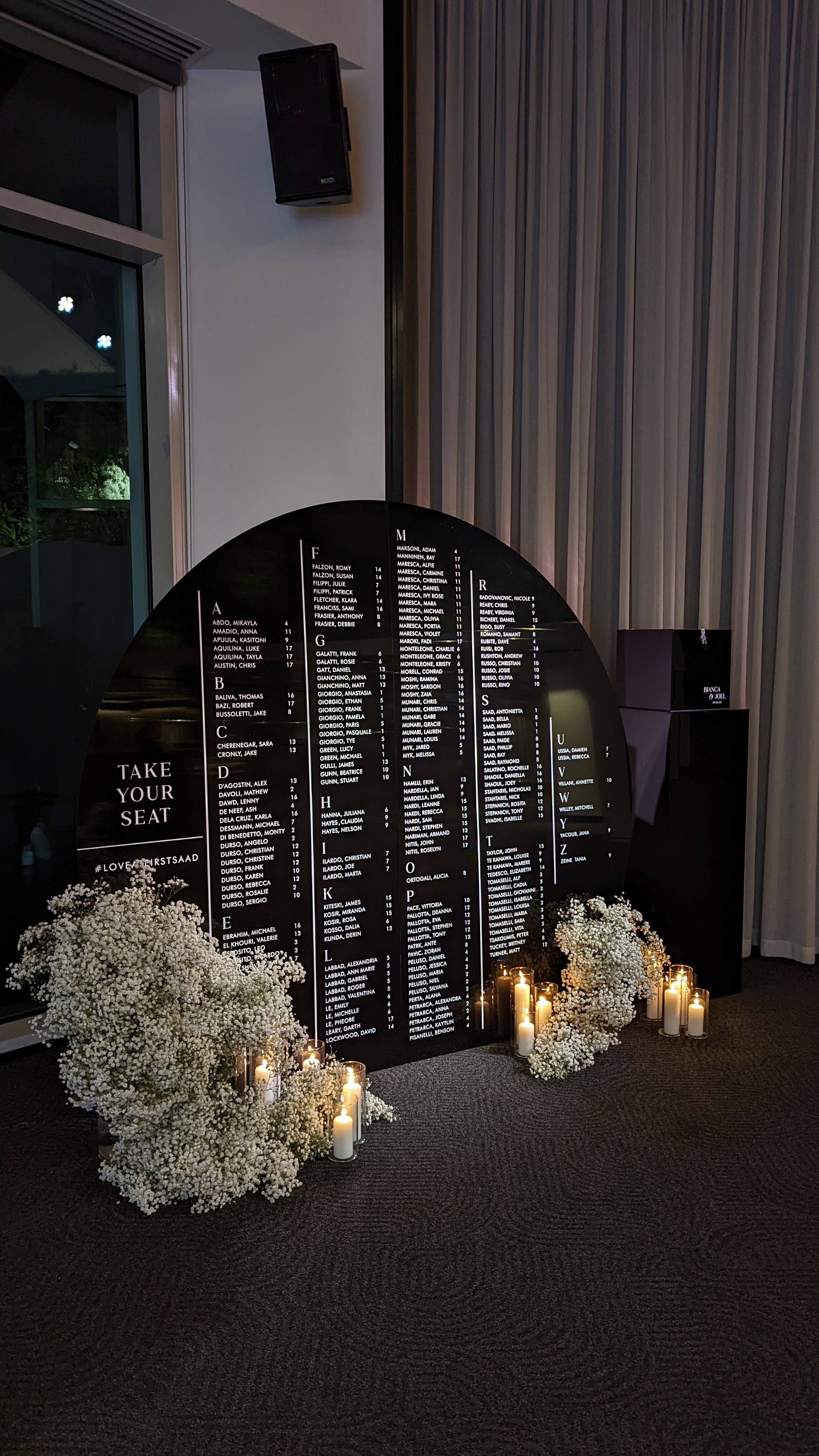
Seating Charts
Seating charts eliminate the awkward shuffle of guests searching for their table. For weddings with more than 60 guests, a well-designed seating chart is not optional; it is essential for keeping your reception timeline on track.
The most effective seating charts organise guests alphabetically by surname rather than by table number. This seems like a small detail, but it reduces the time guests spend scanning the chart by roughly half. When 150 people are trying to find their names before the entrees come out, that efficiency matters.
Popular formats in Melbourne:
- Single large sign with all tables listed (best for weddings under 120 guests)
- Multi-panel displays with alphabetical groupings (best for 120+ guests)
- Individual table cards displayed on a decorative stand or frame
Table Numbers
Table numbers guide guests from the seating chart to their actual seats. They need to be visible from a reasonable distance, legible in reception lighting, and consistent with your overall signage style.
We have found that table numbers between 10cm and 15cm in height hit the sweet spot for readability without overwhelming the table setting. Anything smaller than 8cm tends to get lost among centrepieces and place settings.
Some couples replace numbers with table names, using meaningful locations, favourite films, or shared memories. This adds a personal touch, but remember that “Table Santorini” is harder for guests to locate quickly than “Table 7.” If you go the naming route, keep the seating chart extra clear.
Bar Menu Signs
Melbourne couples take their bar menus seriously, and for good reason. A well-designed bar sign reduces queuing time, showcases signature cocktails, and adds a polished touch to the bar area.
The most effective bar signs include:
- Signature cocktail names and brief descriptions
- Wine and beer options (you do not need to list every variety)
- Non-alcoholic alternatives
- Any relevant notes (e.g., “Ask our bartender about mocktail versions”)
Pro tip from 1,000+ signs: Keep bar sign text to a maximum of eight to ten lines. Anything longer and guests stop reading mid-list, which defeats the purpose entirely.
Directional Signs
Large venues, outdoor properties, and multi-level spaces almost always need directional signage. These are the signs that point guests from the car park to the ceremony, from the ceremony to the cocktail hour, and from cocktails to the reception.
In Melbourne, venues like Carousel Albert Park, Rippon Lea Estate, and many Yarra Valley properties have enough ground to cover that directional signs become genuinely necessary rather than merely decorative.
Effective directional signs use:
- Clear arrows or pointers
- Short text (“Ceremony this way” rather than “Please walk down the path and turn left at the garden to find the ceremony area”)
- Consistent styling with your other signage
- Placement at every decision point where guests might hesitate
Custom Ceremony Signage
Ceremony-specific signs are less common but can add meaningful touches to your vows. These include:
- “Please be seated” or “Choose a seat, not a side” signs for the aisle entrance
- Order of service boards for unplugged ceremonies
- Memorial signs honouring loved ones who have passed
- Scripture, poetry, or quote displays that hold personal significance
These signs tend to be the most emotionally significant pieces we create, and they are often the ones couples keep long after the wedding day.
Materials: Acrylic vs Mirror vs Linen vs Foam Board
The material you choose affects how your signage looks, how it photographs, and how it holds up throughout the day. Here is an honest comparison of the four most popular options we work with at GB Events.
Acrylic
Best for: Modern, minimalist, and romantic aesthetics
Acrylic signs have dominated Melbourne weddings for the past several years, and their popularity shows no sign of fading. The transparent surface creates an elegant, contemporary look that works across nearly every venue style.
Advantages:
- Versatile enough for both indoor and outdoor use
- Photographs beautifully with natural light passing through
- Works with a wide range of lettering colours and styles
- Creates the coveted “floating text” effect
- Lightweight and easy to position on easels
Considerations:
- Can produce glare in direct sunlight or with flash photography (angle matters)
- Fingerprints show easily, so handling with care on the day is important
- Requires a visually interesting background since the sign itself is transparent
Mirror
Best for: Glamorous, art deco, and luxurious wedding styles
Mirror signage adds an unmistakable touch of opulence. The reflective surface catches light beautifully and adds depth to your venue styling, making it a favourite for Melbourne’s more formal wedding venues.
Advantages:
- Creates a high-end, luxurious impression
- Reflects ambient lighting for a warm, inviting glow
- Works as both signage and a decorative element
- Suits formal and glamorous venue settings exceptionally well
Considerations:
- Reflections can sometimes make text harder to read from certain angles
- Heavier than acrylic, requiring sturdier display stands
- Can reflect unwanted elements if positioned carelessly (a backstage area, for instance)
Linen and Satin
Best for: Bohemian, rustic, garden, and organic wedding aesthetics
Fabric-based signage has gained serious traction in Melbourne, particularly among couples seeking a softer, more textural look. Linen and satin signs add warmth and movement that hard materials simply cannot replicate.
Advantages:
- Beautifully soft and textural appearance
- No glare issues, making them reliable in any lighting
- Lightweight and easy to transport
- Suits outdoor and garden venues perfectly
- Adds a relaxed, approachable feel
Considerations:
- Susceptible to wind if not properly secured outdoors
- Wrinkles can appear if stored or transported carelessly
- Limited colour matching compared to printed materials
- Less formal than acrylic or mirror options
Foam Board
Best for: Budget-conscious couples who still want professional results
Foam board offers a clean, modern look at a more accessible entry point. It provides a solid, flat surface that takes print and vinyl lettering beautifully.
Advantages:
- Clean, polished appearance
- Excellent for detailed seating charts with lots of text
- No transparency or reflection issues
- Available in various colours including white, black, and kraft
Considerations:
- Less premium feel compared to acrylic or mirror
- Not suitable for outdoor use in wet conditions
- Can warp in high humidity if not properly finished
- Limited reuse potential
Hire vs Buy: Which Makes More Sense for Melbourne Couples?
This is one of the most common questions we hear, and the answer depends on what you value most.
Hiring signage makes sense when you:
- Want premium materials (acrylic, mirror) without the full purchase cost
- Prefer not to worry about storage after the wedding
- Want professional design, production, and setup handled for you
- Need signs that are tested and proven across hundreds of events
Purchasing signage makes sense when you:
- Want to keep your welcome sign as a keepsake
- Are confident in your DIY design and lettering skills
- Have a simple signage requirement (one or two pieces only)
The reality for most Melbourne couples is that hiring delivers a better result with less stress. Signage design requires an understanding of scale, font legibility at distance, material behaviour in different lighting, and colour matching, all things that come with experience.
Having created over 1,000 signs, we have refined these details across every venue type Melbourne has to offer. That experience means fewer surprises on your wedding day. You can explore our full signage range and enquire about availability.
2026 Signage Trends Melbourne Couples Are Loving
Wedding signage trends in Melbourne evolve year to year, influenced by broader design movements, social media, and the creative energy of local couples. Here is what is defining 2026.
Chrome and Mirrored Finishes
Chrome lettering and mirrored surfaces have moved from niche to mainstream this year. The reflective quality adds dimension and drama, particularly in venues with warm ambient lighting. We are seeing chrome paired with both acrylic and linen bases, creating an interesting contrast between industrial shine and organic texture.
Bold Typography and Statement Shapes
Minimalist script fonts are giving way to bolder, more architectural typography. Couples in 2026 are choosing thick sans-serif fonts, oversized lettering, and non-traditional sign shapes like arches, hexagons, and asymmetrical forms. The goal is signage that doubles as a design feature, not just an informational piece.
Translucent Acrylic with Floating Effect
A refined take on the classic acrylic sign, the 2026 version uses frosted or lightly tinted acrylic to create a softer, more ethereal look. When positioned on a clear easel or suspended from a frame, the text appears to float in mid-air. This trend works exceptionally well for ceremony backdrops and welcome displays.
Mixed Metal Tones
Gone are the days of committing to all-gold or all-silver hardware. Melbourne couples in 2026 are mixing warm golds with cool silvers, adding brushed brass or copper accents alongside chrome. This approach allows more flexibility in coordinating signage with venue fixtures, cutlery, and other metallic details throughout the space.
How to Choose Your Signage Design
With so many options available, narrowing down your signage design can feel overwhelming. These three principles will guide you to the right decision.
Match Your Venue Aesthetic
Your venue does most of the heavy lifting when it comes to setting the scene. Your signage should complement that environment rather than compete with it.
- Industrial venues (brick, exposed beams, concrete) suit acrylic with bold lettering or mirror signs with metallic text
- Garden and outdoor venues pair naturally with linen, satin, or frosted acrylic
- Classic and heritage venues work well with elegant mirror signs or detailed acrylic pieces
- Modern and minimalist venues shine with clean acrylic, simple typography, and plenty of white space
Consider Your Wedding Theme and Colour Palette
Your signage should feel like a natural extension of your stationery suite. If your invitations feature a particular font, colour scheme, or motif, carrying those elements through to your signage creates visual cohesion that guests notice, even if subconsciously.
Share your invitation suite, colour swatches, and any mood board images with your signage provider early in the planning process. This allows ample time for design revisions and ensures consistency across every printed and displayed element.
Readability and Guest Experience
It is tempting to prioritise aesthetics over function, but signage that guests cannot read defeats its own purpose. Keep these readability guidelines in mind:
- Welcome signs: Text should be legible from at least 2 to 3 metres away
- Seating charts: Individual names need to be readable from 1 metre (minimum 14-point equivalent)
- Directional signs: Arrows and key words must be visible from 5+ metres
- Bar menus: Text should be comfortable to read while standing at the bar
Script fonts look beautiful but become difficult to read at smaller sizes or longer text lengths. Use script for headings and names, but switch to a clean serif or sans-serif for any detailed information.
Signage Placement Tips from 1,000+ Signs Created
Placement can make or break the effectiveness of even the most beautifully designed sign. Here is what we have learned from setting up signage at over 1,000 events across Melbourne.
Welcome signs should be positioned where guests naturally pause as they enter, not where they are still walking. The ideal spot is just past the entrance, near the first visual focal point. If guests are moving, they will walk right past your sign without reading it.
Seating charts need to be placed where guests can comfortably queue without blocking foot traffic. Allow at least 2 metres of clear space in front of the chart for guests to gather. Position it along a wall or at the edge of a pathway, never in the middle of a thoroughfare.
Table numbers should be the tallest element on the table or positioned at the centre where they are visible from all angles. If your centrepieces are tall, consider placing numbers at the front edge of the table facing inward.
Directional signs are most effective at decision points, places where guests must choose between two or more paths. Position them at eye level (approximately 150cm from the ground) and ensure they are visible before guests reach the junction, not after.
Bar signs work best mounted behind or above the bar, not sitting on the bar surface where they compete for space with glasses and bottles. If mounting is not possible, use a small easel positioned at one end of the bar.
Lighting matters. Even the most stunning sign is useless if it is hidden in shadow. Confirm that your venue’s existing lighting adequately illuminates each sign placement, or arrange for targeted uplighting. Many Melbourne venues have adjustable lighting, so raise this with your venue coordinator during your final walkthrough.
Coordinating Signage with Your Photo Booth and Decor
Your wedding signage should not exist in isolation. When coordinated thoughtfully with your photo booth setup and decor hire elements, it creates a unified visual experience that feels intentional and polished.
With your photo booth: Your photo booth print design can echo the fonts, colours, and motifs used on your signage. This means guests take home a keepsake that visually matches the welcome sign they walked past and the seating chart they read. At GB Events, we design custom print templates that coordinate directly with your signage suite, creating a consistent visual thread from the moment guests arrive to the printed photo they carry home.
With your decor: Table numbers, wishing wells, and acrylic signs from your decor hire should share the same material palette as your larger signage. If your welcome sign is frosted acrylic with gold lettering, your table numbers should follow suit. Mixing materials without intention, say a rustic wooden table number alongside a sleek mirror welcome sign, creates visual discord.
With your stationery: Your signage is effectively the large-format extension of your wedding stationery. Menus, place cards, programs, and signage should all feel like they belong to the same family. Share your stationery designs with your signage provider to ensure alignment.
The couples who receive the most compliments on their wedding styling are invariably the ones who treated every visual element as part of a single, cohesive design system rather than a collection of separate decisions.
Frequently Asked Questions
How far in advance should I book wedding signage in Melbourne?
We recommend booking your wedding signage at least three to four months before your wedding date. This allows adequate time for design consultations, revisions, production, and any adjustments based on your final guest list (particularly relevant for seating charts). During Melbourne’s peak wedding season from October through April, popular signage providers book out quickly, so earlier is better. Get in touch with our team to check availability for your date.
How many signs does a typical Melbourne wedding need?
Based on our experience across 1000+ events, the average Melbourne wedding uses between four and seven signs. Most couples start with a welcome sign and seating chart, then add table numbers, a bar menu sign, and one or two directional signs depending on the venue. Larger or multi-area venues typically require more directional signage, while intimate celebrations can often manage with just two or three key pieces.
Can wedding signage be used outdoors in Melbourne weather?
Yes, but material choice matters significantly. Acrylic and mirror signs handle outdoor conditions well, including Melbourne’s famously unpredictable weather. Foam board is not recommended for outdoor use due to moisture sensitivity. Linen and satin signs work outdoors in calm conditions but should be secured against wind and have a backup plan for rain. We always discuss venue specifics and weather contingencies during our design consultation.
What is the difference between hiring and buying wedding signage?
Hiring gives you access to premium materials and professional design without the full purchase cost, and you do not need to worry about storage or disposal after the wedding. Buying means you keep the sign permanently, which is appealing for welcome signs that couples want to display at home. At GB Events, we offer both options and can advise on which approach suits your specific needs and budget during a consultation.
Can I customise the signage to match my wedding invitations?
Absolutely. Custom design is central to what we do. Share your invitation suite, colour palette, and any design references with us, and we will create signage that feels like a seamless extension of your stationery. We work across all materials, including acrylic, mirror, linen, and satin, to ensure your signage matches both your design vision and your venue environment.
More Frequently Asked Questions
How much does wedding signage cost in Melbourne?
Custom wedding signage in Melbourne ranges widely depending on material, size and quantity. A single acrylic welcome sign typically starts around the same entry price as our photo booth package, with full signage suites combining welcome, seating chart and table numbers priced as a bundle. GB Events offers free quotes and includes delivery and setup within 50 km of the Melbourne CBD.
How long does it take to make a custom wedding sign?
Standard production for custom acrylic and mirror signage runs 3 to 4 weeks from final design approval. Seating charts often need a final 7 to 10 day window before the wedding to lock in guest lists. For rush orders, we can sometimes accommodate shorter timelines, but booking 3 to 4 months ahead remains the safest approach for Melbourne couples.
Do you deliver and install wedding signage in Melbourne?
Yes. GB Events provides delivery, professional installation and pack-down for all signage hire packages within 50 km of the Melbourne CBD. Our team has set up signs at more than 1000 events across venues including Stones of the Yarra Valley, The Refinery, Cargo Hall, Rippon Lea Estate and Carousel Albert Park, so we know the access, lighting and placement quirks of most local venues.
What is the best material for a wedding welcome sign?
Acrylic is the most popular and versatile choice for Melbourne welcome signs. It photographs beautifully, suits both indoor and outdoor settings and works with virtually any colour palette. Mirror suits formal and glamorous venues, while linen and satin are ideal for garden, rustic and bohemian aesthetics. Foam board is a budget-friendly option for seating charts but is not recommended for outdoor use.
Can I keep my wedding signs after the event?
If you purchase rather than hire, the signs are yours to keep. Many couples choose to buy their welcome sign as a keepsake to display at home, while hiring the rest of the suite. At GB Events, founded in 2015 by Gina Balic, we can advise on which pieces are worth purchasing as keepsakes and which are better hired to save on cost and storage.