
TL;DR
- What it is: a wedding run sheet is a timed, minute-by-minute plan of the day that every key person and supplier works from.
- Typical evening reception: guests arrive around 6pm, entrance at 7pm, speeches between entrée and main, first dance after 9pm, carriages at 11:30pm.
- Vendors need setup time: plan supplier bump-in well before doors. Our photo booth setup is planned 60 to 90 minutes before guests arrive.
- Who gets a copy: MC, venue coordinator, photographer, videographer, DJ or band, celebrant, photo booth and styling teams, the wedding party and parents.
- Templates below: a full 6pm to 11:30pm evening timeline and a 12pm to 5pm lunch wedding version.
A wedding run sheet (also called a wedding timeline or reception timeline) is the minute-by-minute schedule for your day that your MC, venue and suppliers all work from. For a typical Melbourne evening reception, guests arrive around 6pm, the wedding party enters at 7pm, speeches fall between entrée and main, the first dance happens after 9pm and carriages are at 11:30pm.
Below you will find two complete templates you can copy, an evening reception and a lunch wedding, along with who should get a copy, what each supplier needs from it, and exactly where a photo booth, audio guestbook and signage slot in.
Why your wedding needs a run sheet
Your venue will probably have its own timeline for food and drinks service. Your run sheet joins that up with everything else: the photographer’s golden-hour portraits, the DJ’s cues, the MC’s introductions, when the cake gets cut and when each supplier arrives and leaves. It answers the question everyone will ask on the day: “What happens next, and when?”
A good run sheet:
- Lists times, not just order, so suppliers can plan arrivals and breaks
- Names who is responsible for each moment (MC, DJ, venue, couple)
- Includes music cues for entrances, cake and first dance
- Shows bump-in and bump-out times for every supplier
- Has a contact list at the top: one key contact per supplier and a day-of point person who is not you
Evening reception run sheet template (6pm to 11:30pm)
This template assumes a ceremony earlier in the afternoon, a 6pm reception start at a Melbourne function venue, an alternate-drop or plated two-course dinner plus dessert, and a DJ. Adjust times to your venue’s service plan.
Before guests arrive: supplier bump-in
| Time | What happens | Who |
|---|---|---|
| 2:00pm to 4:30pm | Venue setup: tables, linen, place settings. Florist and stylist bump-in | Venue, florist, stylist |
| 3:30pm | Signage placed: welcome sign, seating chart or QR seating sign, table numbers, bar sign | Signage supplier or stylist |
| 4:30pm | Photo booth bump-in begins (60 to 90 minutes before doors) | Photo booth team |
| 4:30pm to 5:30pm | DJ setup and sound check, microphone tested for speeches | DJ, venue |
| 5:15pm | Audio guestbook placed on its side table and the greeting tested | Audio guestbook supplier |
| 5:30pm | All suppliers set. Final walk-through with the venue coordinator | Venue coordinator |
The reception
| Time | What happens | Who | Notes |
|---|---|---|---|
| 6:00pm | Guests arrive. Canapés and drinks | Venue, DJ | Welcome sign and seating chart at the entrance. Audio guestbook open |
| 6:00pm to 6:45pm | Couple and wedding party portraits | Photographer | In warmer months this is often golden hour |
| 6:30pm | Photo booth opens | Photo booth team | Catches the end of cocktail hour |
| 6:50pm | MC asks guests to take their seats | MC | Allow 10 minutes; seating always takes longer than expected |
| 7:00pm | Wedding party and couple entrance | MC, DJ | Entrance songs cued in advance |
| 7:10pm | MC welcome and housekeeping. Optional acknowledgement or grace | MC | |
| 7:15pm | Entrée served | Venue | |
| 7:45pm | Speeches block (about 25 to 30 minutes) | MC, speakers | Photo booth paused. Glasses topped up before the first toast |
| 8:15pm | Main course served | Venue | Background music |
| 8:15pm | Photo booth reopens | Photo booth team | Often quieter during mains, a good time for older guests and families |
| 9:00pm | Cake cutting | MC, DJ, couple | Photographer and videographer ready |
| 9:10pm | First dance | DJ, couple | Wedding party joins for the last chorus if you like |
| 9:15pm | Dance floor opens | DJ | Busiest time of night at the photo booth |
| 9:45pm | Dessert, or cake served as dessert, with tea and coffee | Venue | |
| 10:30pm | Optional late-night snack | Venue | |
| 11:00pm | Photo booth closes | Photo booth team | Four and a half hours of booth time in this example |
| 11:15pm | Last song and farewell (circle, arch or guard of honour) | DJ, MC | Check venue rules on sparklers |
| 11:30pm | Carriages | Venue | Taxis and transport booked in advance |
| 11:30pm onwards | Supplier pack-down and collection of gifts, cards and personal items | Suppliers, a nominated family member |
Melbourne timing notes
- Daylight. In summer, with daylight saving, it is still light well into the evening, so portraits can run during canapés. In winter it is dark before most receptions start, so plan photos earlier in the afternoon or indoors.
- Weather. Melbourne can change fast. If any part of your reception is outdoors, write a wet-weather version of the run sheet, not just a note that says “move inside”.
- Curfews. Many venues have a fixed finish time or music curfew. Work backwards from it so your farewell is not rushed.
- Food service. Ask your venue when each course must leave the kitchen. Speeches, cake and first dance fit around service, not the other way around.
Lunch wedding run sheet template (12pm to 5pm)
Lunch weddings suit winery, garden and restaurant receptions, from the Yarra Valley to the Mornington Peninsula. The shape is the same, just compressed, and there is usually less dancing and more lingering at the table.
| Time | What happens | Who | Notes |
|---|---|---|---|
| 9:00am to 10:30am | Venue setup, florist and styling bump-in | Venue, florist, stylist | |
| 10:30am | Signage placed. Photo booth bump-in begins | Signage, photo booth team | Booth setup planned 60 to 90 minutes before guests arrive |
| 11:00am | Ceremony (on-site) | Celebrant | Run your ceremony timeline separately |
| 11:30am | Guests move to drinks and canapés. Audio guestbook open | Venue | |
| 11:30am to 12:15pm | Couple and family portraits | Photographer | Midday light is harsh, so shade helps |
| 12:00pm | Photo booth opens | Photo booth team | |
| 12:20pm | MC asks guests to be seated | MC | |
| 12:30pm | Couple entrance and MC welcome | MC, DJ or musician | |
| 12:40pm | Entrée or shared plates | Venue | |
| 1:10pm | Speeches block | MC, speakers | Photo booth paused |
| 1:40pm | Main course | Venue | |
| 2:30pm | Cake cutting and first dance | MC, couple | |
| 2:45pm | Dance floor or lawn games | DJ or musician | Booth at its busiest |
| 3:30pm | Dessert, tea and coffee | Venue | |
| 4:30pm | Photo booth closes | Photo booth team | Four and a half hours of booth time |
| 4:45pm | Farewell | MC | |
| 5:00pm | Guests depart. Pack-down | Venue, suppliers |
Who gets a copy of the run sheet
| Person | Why they need it | What to highlight |
|---|---|---|
| MC | Runs the formalities | Speaker order, intros, phonetic names, music cues |
| Venue coordinator | Runs service and the room | Course times, speeches, cake, curfew |
| Photographer and videographer | Plans portraits and key moments | Entrance, speeches, cake, first dance, farewell |
| DJ or band | Cues every music moment | Song titles for each cue and the times |
| Celebrant | Ceremony timing | Ceremony start and any reception role |
| Photo booth team | Plans bump-in, opening and pauses | Venue access time, booth hours, speeches window |
| Florist and stylist | Bump-in and bump-out | Access times and pack-down window |
| Wedding party | Knows where to be | Entrance time, speeches, farewell |
| Parents | Knows the shape of the night | Speeches, cake, first dance |
| Day-of point person | Answers supplier questions so you don’t have to | The whole thing, plus all supplier phone numbers |
Send the final version about a week before the wedding, and print a few spare copies for the venue on the day.
Where vendors fit: photo booth, guestbook, signage and more
Photo booth
- Bump-in: on our event-day timelines, photo booth setup is planned 60 to 90 minutes before doors. The open-air booth itself sets up in about 45 minutes, so the extra time covers unloading, venue access and testing.
- Space and power: the open-air booth needs roughly 2 m × 2 m including the backdrop, plus a standard 10-amp power point within 10 metres. Put that in the venue notes on your run sheet.
- Hours: most Melbourne weddings book four to five hours, covering the end of cocktail hour, dinner and the post-first-dance peak when the booth is busiest. Both templates above use four and a half hours.
- Same-venue ceremonies: if your ceremony and reception are at the same venue, we can set up early and pause until guests arrive.
- Speeches: with an attended booth, our attendant is on-site for the whole hire, so a paused window during speeches is simple. Mark it on the run sheet.
- Remote booths: a remote booth is set up and then monitored remotely every 20 to 30 minutes, with our team staying within 20 minutes of the venue. It runs itself through the night, so include the booth hours on the run sheet for the venue team.
- After the night: the online gallery link arrives within 24 hours.
See our photo booth hire page for packages, which start from $850 + GST.
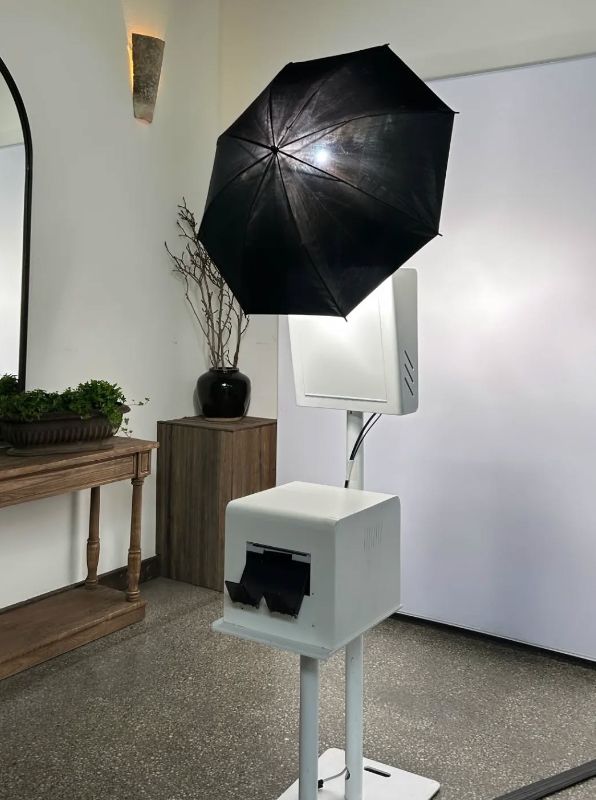
A booth set up and tested before doors. Bump-in time belongs on the run sheet, not just in an email thread.
Audio guestbook
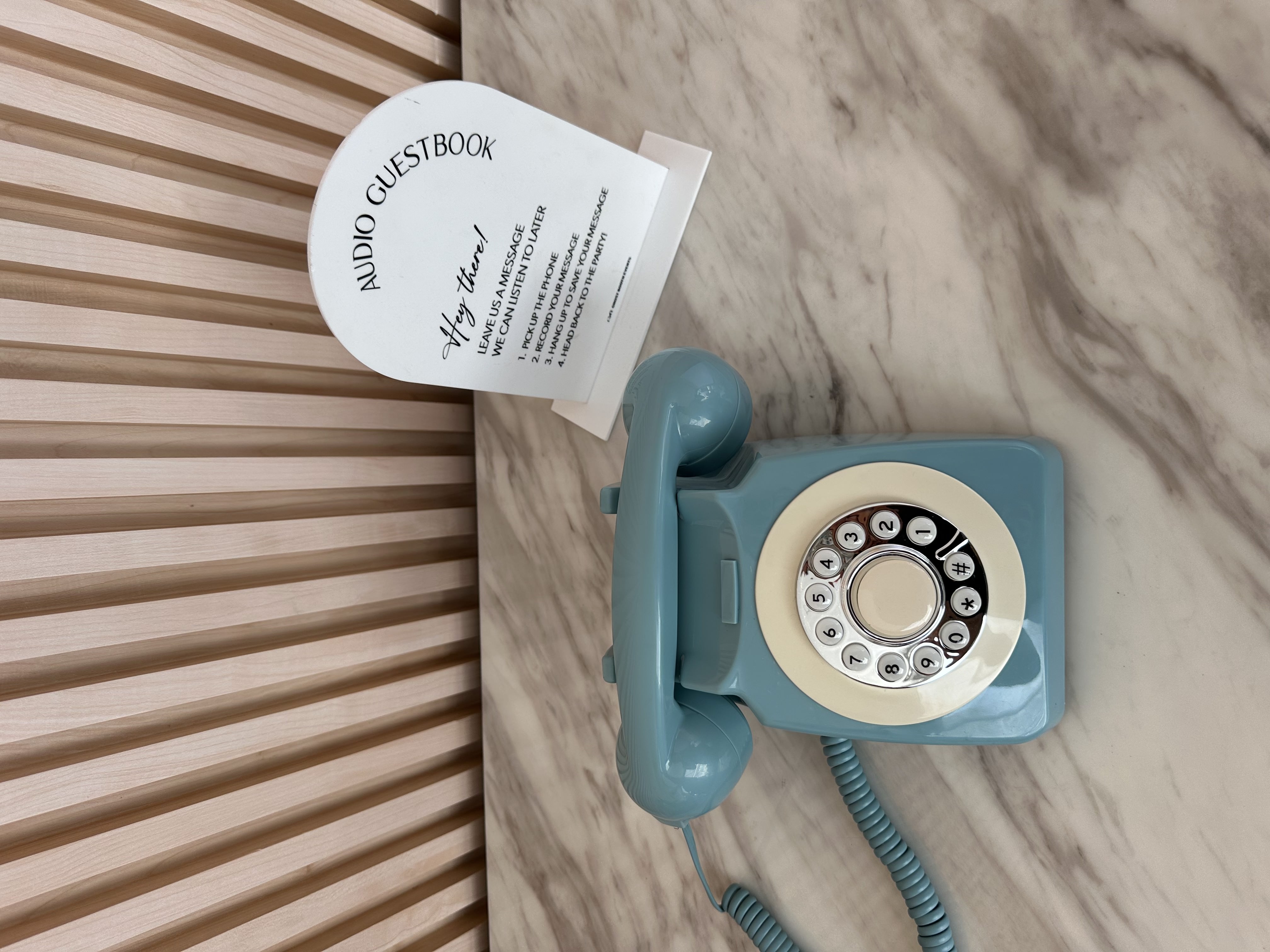
- Placement: most couples put the phone on a side table near the entrance, so guests can leave a message during canapés while the photo booth runs during the reception.
- Setup: it runs from a single power point with no Wi-Fi or attendant, and setup is one button. It can be placed at the same time as the booth.
- Timing: messages have no length limit. Across our events the average message runs 45 to 90 seconds, so the phone works best somewhere a little away from the speakers and the dance floor.
- After: recordings arrive as an online gallery, typically within a few days of the wedding.
Audio guestbook hire starts from $350 and is discounted when bundled with a photo booth. See audio guestbook hire.
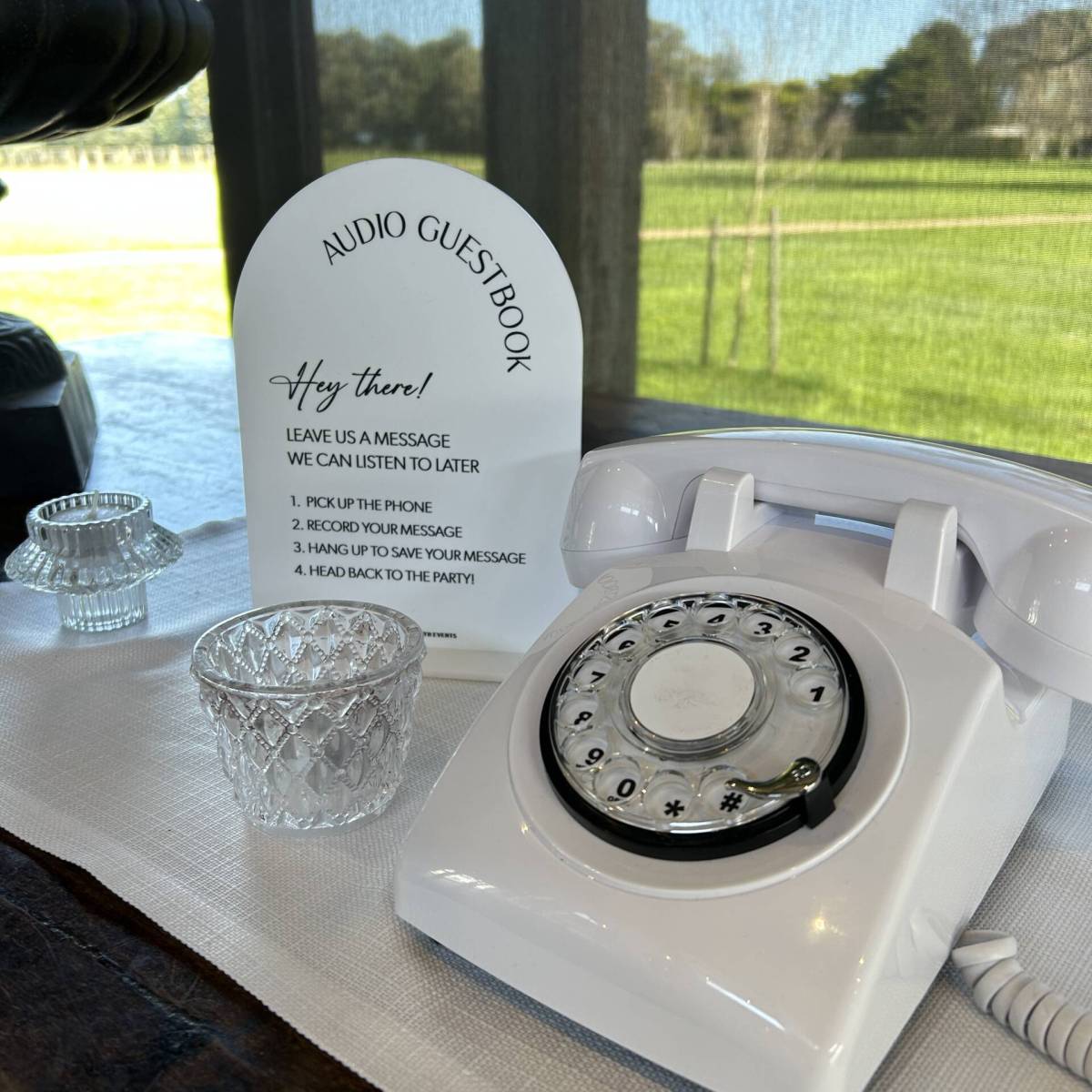
An audio guestbook with its instruction sign, set up near a window. One power point and a side table is all it needs.
Signage and seating chart
- Ordering: allow four to six weeks for signage design and production. Seating charts are usually finalised about 10 days before the wedding, once RSVPs close.
- QR seating charts: if you use a QR code seating chart, table changes can keep flowing into the live chart right up to the day without reprinting the sign.
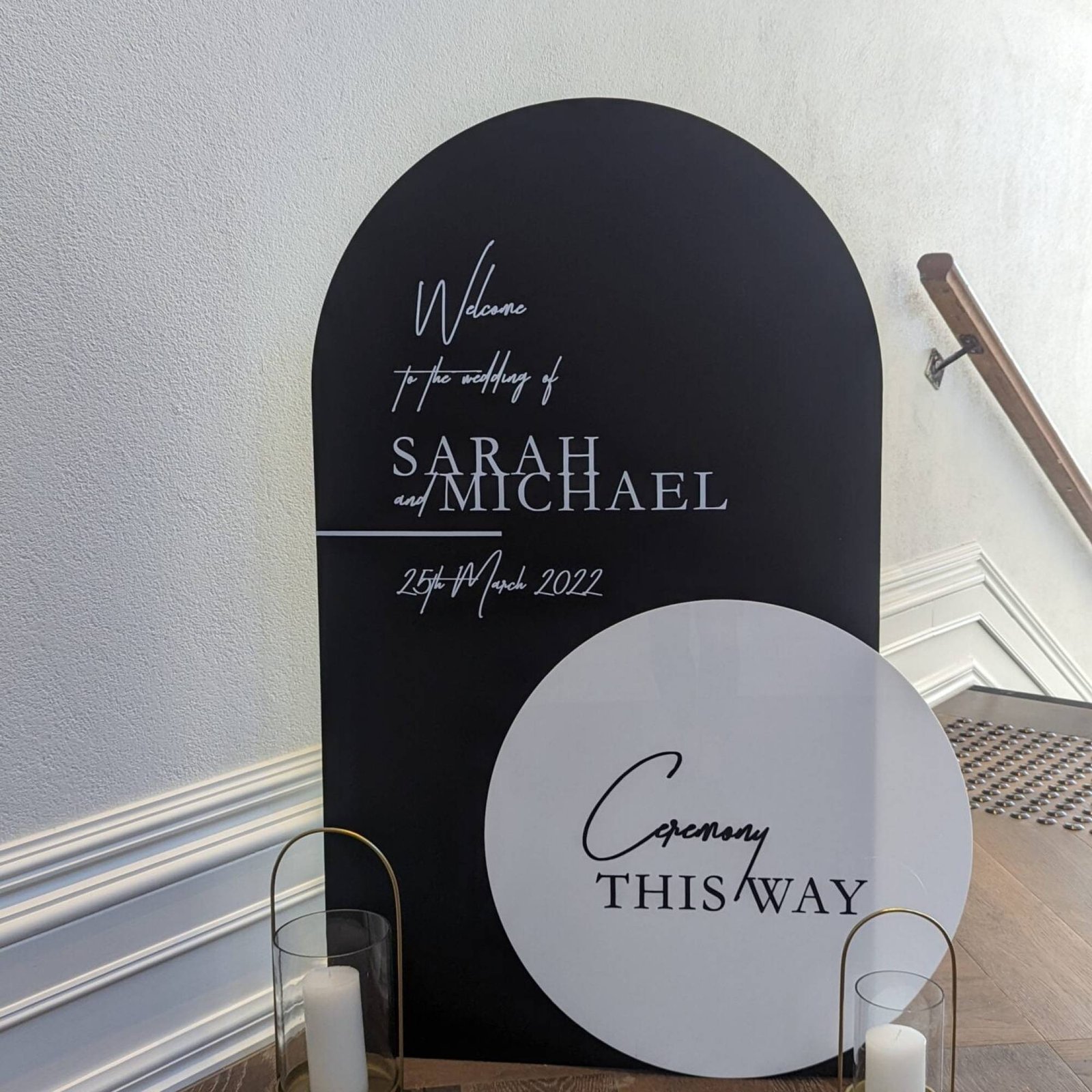
- On the day: when combined with a photo booth booking, Ghost Booth Events delivers and places signage in the same trip, so it fits into the photo booth bump-in window. Put the welcome sign and seating chart where guests arrive, before 6pm in the evening template.
Browse wedding signage for welcome signs, seating charts and table numbers.
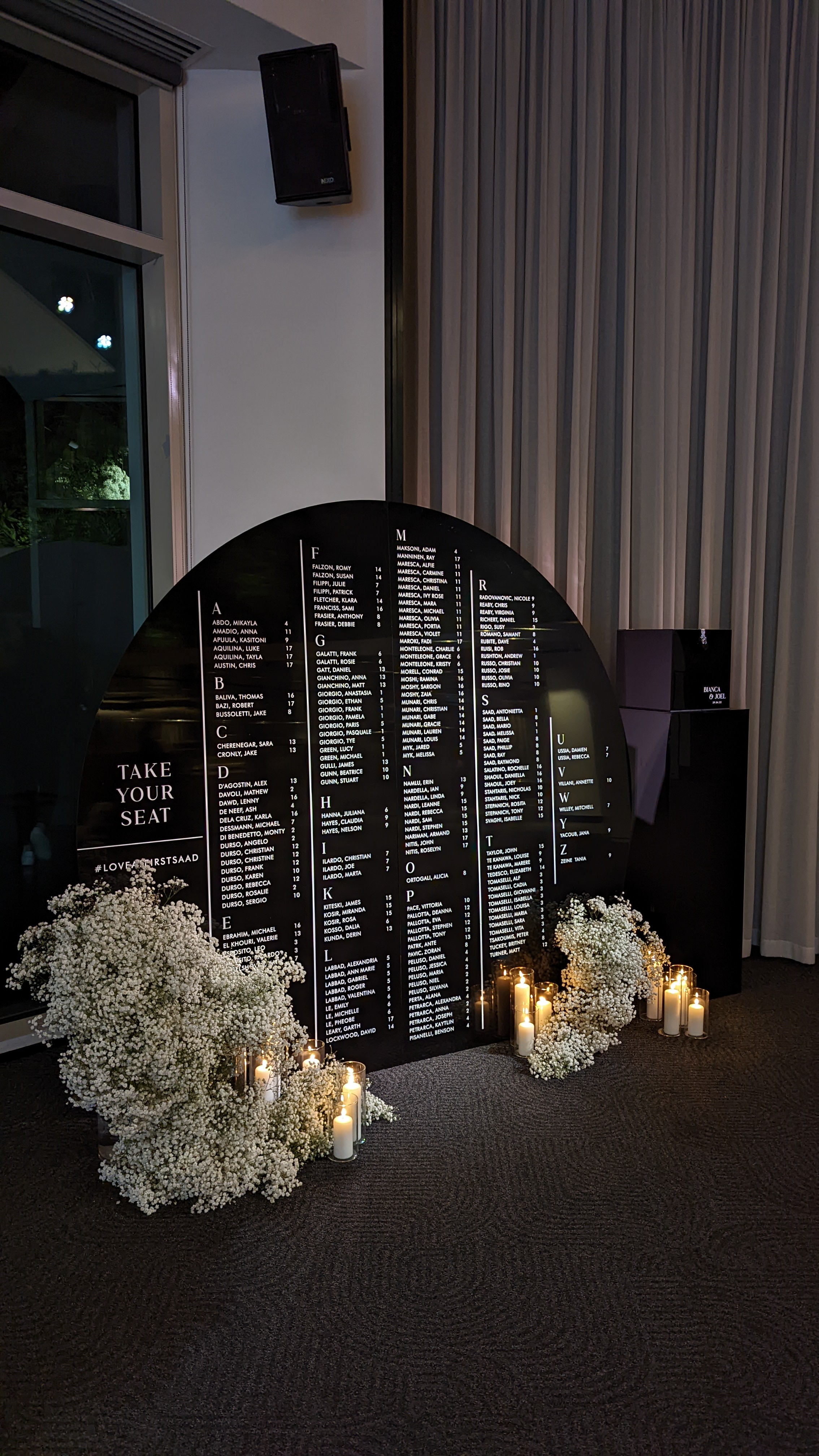
An alphabetical seating chart styled at the entrance. It should be in place before guests arrive for canapés.
Speeches
Group speeches into one block of about 25 to 30 minutes, usually between entrée and main. Our wedding speech order guide covers who speaks when and how to brief your MC.
First dance and music cues
Write the song title next to every music moment: wedding party entrance, couple entrance, cake cutting, first dance, last song. Our lists of wedding party entrance songs and wedding reception songs are a good place to start.
Cake
Cake cutting usually sits just before the first dance so the photographer covers both in one go. If the cake is being served as dessert, tell the venue so they can plate it in time.
Run sheet tips that save the night
- Build in buffers. Add 5 to 10 minutes after anything involving moving guests: seating, entrances, the farewell.
- One block of formalities. Entrance, speeches, cake and first dance close together keeps the rest of the night free.
- Name a point person. A sibling, friend or planner who holds the run sheet and supplier numbers so you do not take calls on your wedding day.
- Share early, then lock it. Send a draft a month out, final version a week out. Changes after that go through your point person.
- Match the booth hours to the party, not the clock. Booth time is most valuable from the end of canapés through the dance floor peak.
If you would like help fitting a photo booth, audio guestbook or signage into your timeline, send us your date and venue and we will reply with a quote and the setup details your venue needs.
Wedding run sheet questions
What is a wedding run sheet?
A wedding run sheet is a timed, minute-by-minute schedule of your wedding day or reception. It lists what happens when, who is responsible, music cues and supplier arrival and pack-down times, and it is shared with your MC, venue, suppliers and wedding party.
What time do wedding speeches happen at a reception?
Most Australian receptions hold speeches between the entrée and main course, or just after the main is cleared. In a 6pm reception that usually means somewhere between 7:30pm and 8:30pm. Confirm course timing with your venue first.
When should the photo booth arrive and open?
Ghost Booth Events plans photo booth setup 60 to 90 minutes before guests arrive, and the open-air booth itself takes about 45 minutes to set up. Most Melbourne weddings book four to five hours of booth time, opening toward the end of cocktail hour and running through the dance floor peak.
Who should have a copy of the wedding run sheet?
Your MC, venue coordinator, photographer, videographer, DJ or band, celebrant, photo booth team, florist and stylist, the wedding party, both sets of parents and a day-of point person. Send the final version about a week before the wedding.
When is the first dance at a wedding reception?
The first dance usually follows the main course and cake cutting, often around 9pm at an evening reception that starts at 6pm. Placing it straight after the cake keeps the formalities together and opens the dance floor for the rest of the night.