
TL;DR
- Yes, with cover: a photo booth works at an outdoor wedding if it sits on a level, covered 2 m by 2 m space with power nearby.
- Melbourne changes fast: sunshine can turn to wind and rain in the same afternoon, so plan the booth spot for the worst weather, not the forecast.
- Shade beats sunshine: the booth brings its own studio lighting; direct sun and bright backlight work against it.
- Wind is the backdrop's enemy: keep the booth out of the breeze, against a wall or inside a marquee.
- Decide Plan B early: agree on an indoor or undercover booth position with your venue before the day.
You can absolutely have a photo booth at an outdoor wedding, as long as the booth itself has a level, covered spot out of the wind and a power point within reach. Our standard requirement is a level, covered space of roughly 2 m by 2 m and a standard 10-amp power point within 10 metres.
Your ceremony, canapés and golden-hour portraits can be outside. The booth just needs a sheltered corner. This guide covers what to plan for, with notes from Melbourne venues and a checklist you can send to your venue coordinator.
Melbourne weather: plan for change, not the forecast
Melbourne’s reputation for “four seasons in one day” is real. The Bureau of Meteorology explains that the city sits between the hot interior and the Southern Ocean, in a belt of westerly winds, and that bright sunshine can give way to a cool change, followed by wind and rain, all before the day is done. When a cold front arrives, temperatures can drop and clouds roll in within minutes.
For a photo booth, that means three practical things:
- A sunny forecast is not a plan. Choose a booth spot that still works if the wind picks up at 7pm.
- Wind is as big a problem as rain. A backdrop catches breeze like a sail, even on a dry evening.
- The light will change. An afternoon that starts bright will be dark by the time the dance floor fills.
Light: why shade beats sunshine
It sounds backwards, but a photo booth looks best out of the sun. Our booths use professional studio lighting, so the photos look the same late at night as they did at the start. Strong sunlight fights that lighting.
- Sun behind guests turns faces into silhouettes and washes out the backdrop.
- Sun behind the camera has guests squinting into it, with harsh shadows under the eyes.
- Dappled shade under trees throws patchy light across faces that changes from frame to frame.
- Fading daylight changes the look of every session as the evening goes on.
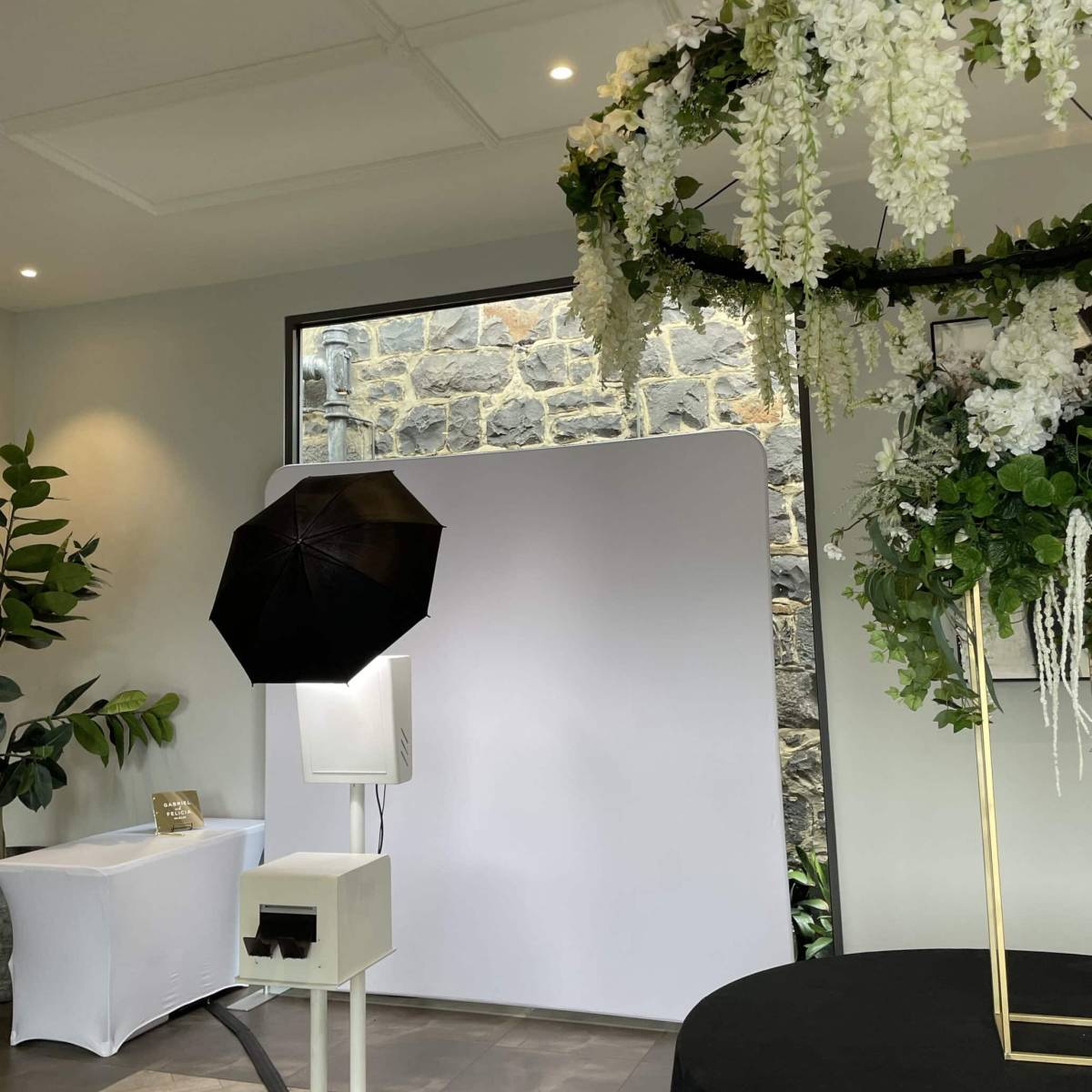
Full shade, under a roof, a verandah or marquee, gives the booth’s own lighting a clean, consistent starting point. If your venue has big windows, the backdrop should sit against a solid wall or face away from the glass, as in the photo at the top of this post, where the backdrop blocks the window behind it.

Low, golden light is lovely for portraits, where a photographer can move around it. A booth camera is fixed in one spot, which is why we keep it in shade.
Wind and backdrops
Our booth uses a tension pillowcase backdrop on weighted stands, which is stable indoors and in sheltered spaces. In open wind, any large backdrop wants to move, and a moving backdrop means wrinkles, gaps and a risk of it tipping.
To keep the backdrop still:
- Put a wall behind it. A building wall, a marquee wall or a verandah corner breaks the wind.
- Avoid gaps and corridors. Breezeways between buildings and open marquee doorways funnel wind.
- Skip loose draping outdoors. Flowing fabric looks beautiful indoors but flaps in a breeze.
- Keep the printer covered. Fresh prints and gusts don’t mix.
This is why, for winery receptions in the Yarra Valley, we position the booth indoors: wind and fading daylight affect the backdrop and lighting on terraces, so the booth runs inside through to the last dance while guests enjoy the terrace for cocktails.
Power and extension leads
The booth needs a standard 10-amp power point, ideally within 10 metres. Where the best booth spot is further from power, we bring extended cable runs; at venues with long distances, such as the maritime sheds at Seaworks in Williamstown, we bring extended cable runs and ramps as standard.
A few safety basics for any outdoor event power, drawn from Energy Safe Victoria’s advice:
- Keep leads out of wet areas unless they are specifically designed for that purpose.
- Don’t piggyback adaptors. Energy Safe Victoria recommends a power board with a built-in safety device instead.
- Run cables away from walkways, or cover them with a cable ramp so nobody trips in the dark.
- Tell your suppliers who is sharing the circuit. Bands, heaters and catering equipment on the same power can all add load.
All Ghost Booth Events equipment is tagged and tested, and we carry public liability insurance with a certificate of currency available on request.
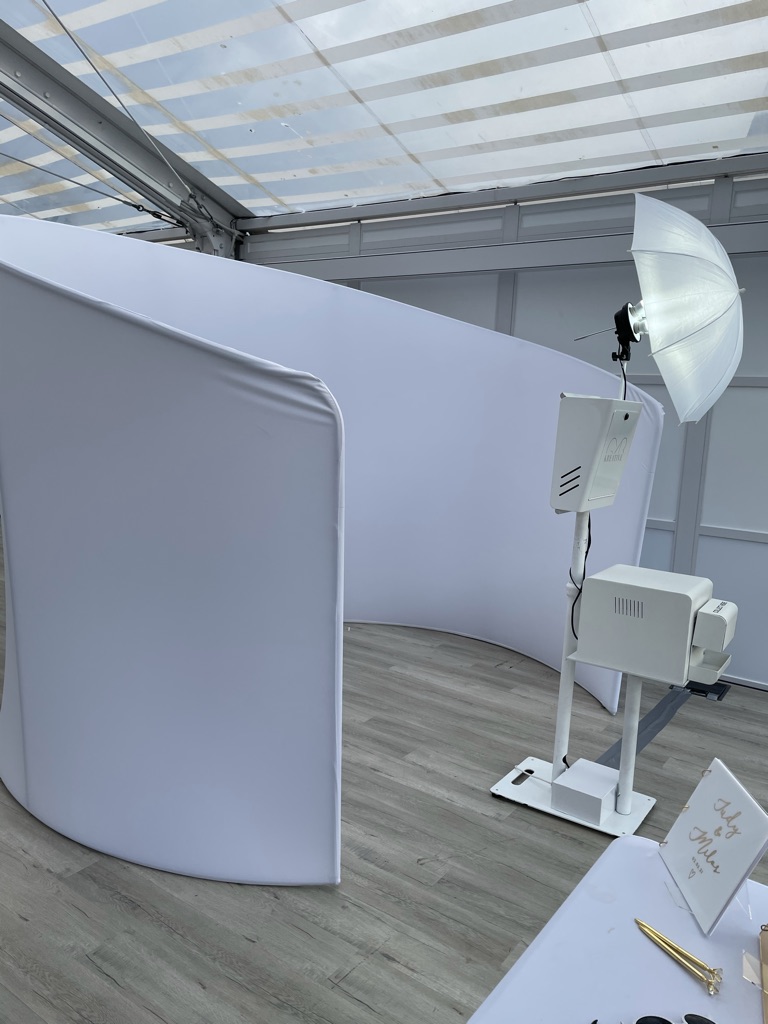
The enclosed booth set up under a covered, roofed structure on a level timber-look floor.
Level, firm ground
The camera, lighting and printer stand on a frame, and the backdrop stands on weighted bases. On sloping lawn or soft ground, both lean, and nothing looks straight in the photos.
Good outdoor surfaces include a timber deck, paving, a marquee floor or a hired dance floor. Grass on its own is rarely level enough. In the Dandenong Ranges, for example, we set up indoors or on a level deck and confirm the best spot with your venue coordinator.
Your wet-weather plan
Every outdoor wedding needs a Plan B, and the booth should be part of it.
- Choose the backup position now. A foyer, verandah, marquee corner or indoor room, with the same 2 m by 2 m space and nearby power.
- Agree who makes the call and by what time. The booth needs to be set up and tested before guests arrive, so a last-minute switch is harder than it sounds.
- Tell every supplier. If the band, caterers and booth are all moving inside, the room plan has to fit everyone.
- Keep a dry route for gear. Equipment travels on a trolley, so a covered path from parking to the booth spot helps.
For backyard receptions in suburbs like Brunswick, we confirm the power point and weather cover with you the week before the wedding.
Venue notes from around Melbourne
| Area | What to know | More |
|---|---|---|
| Yarra Valley | Winery receptions often start with a golden-hour cocktail session on a terrace before moving inside. We set the booth indoors for the reception and plan to arrive at least 90 minutes before it needs to be live. | Yarra Valley |
| Mornington Peninsula | The booth is set up inside the reception space with an attendant. Where mobile reception is patchy, photos are stored on the booth and texts or emails send once it reconnects. | Mornington Peninsula |
| Williamstown and inner west | Waterfront and industrial venues with big floor space; at Seaworks we bring extra cable runs for the long power distance. | Williamstown |
| Geelong and Bellarine | For marquee weddings we need a level, covered 2 m by 2 m area and a 10-amp power point within about 15 metres, with our own extended cable runs and lighting. | Geelong |
| Dandenong Ranges | Hills venues can be dark and cool; the booth’s studio lighting handles that. We set up indoors or on a level deck. | Dandenong Ranges |
For more venue-specific advice, see our guide to Melbourne wedding venues that suit a photo booth and our tips on where to put a photo booth at a wedding.
Outdoor-friendly extras
Some guest experiences cope with outdoor settings more easily than a full booth:
- Retro video guest book: fully self-contained, with no power point or Wi-Fi needed, so it can sit anywhere sheltered. See our video guestbook.
- Audio guestbook: runs from a single power point with no Wi-Fi or attendant, and needs only a side table.
Both still want shelter from rain and a quiet spot away from speakers.
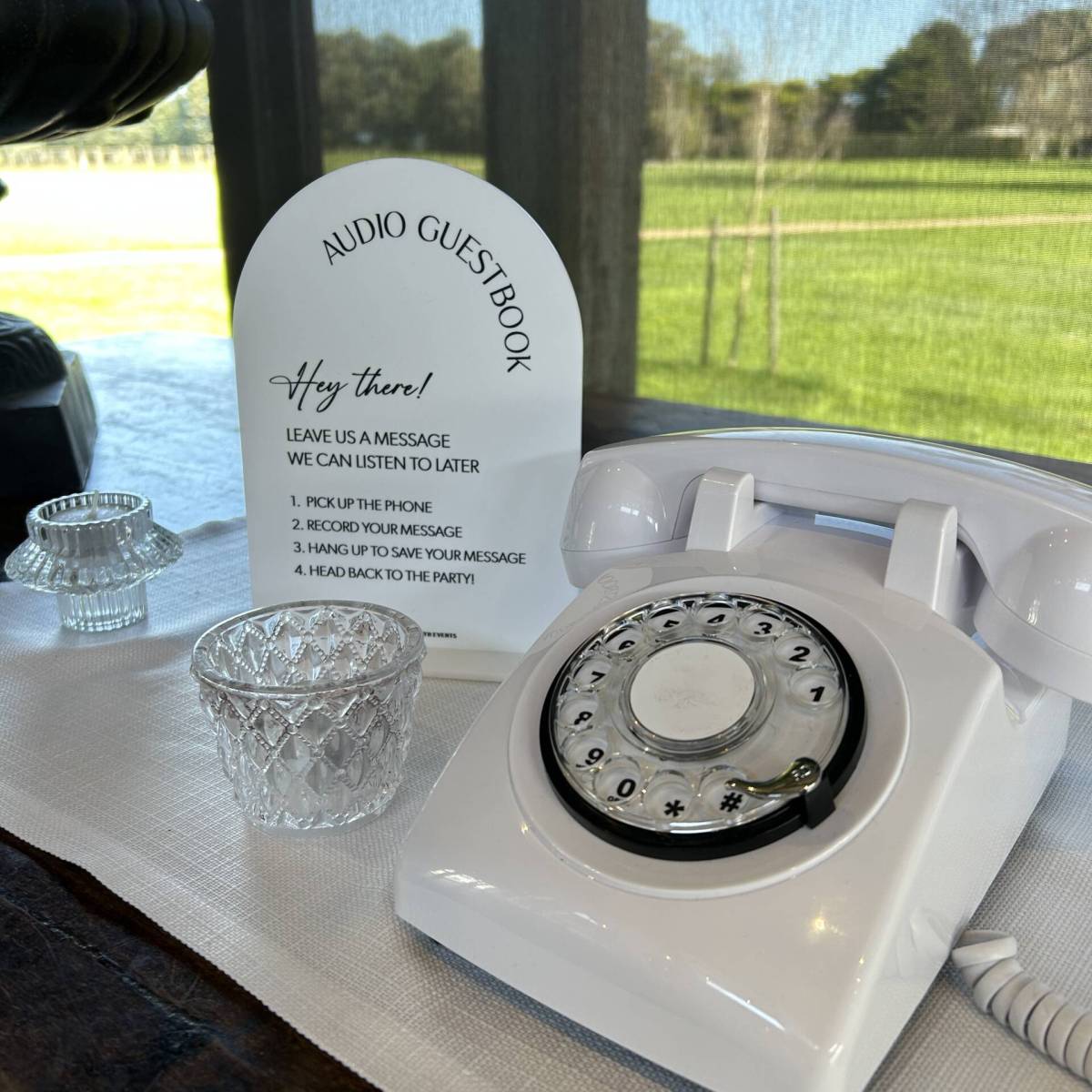
An audio guestbook on a covered table with a view over the paddock: outdoors in feel, sheltered in practice.
Outdoor photo booth checklist
Copy this into an email to your venue coordinator:
- Booth position is covered (roof, verandah or marquee), not just shaded by trees
- Space of roughly 2 m by 2 m, plus room for a queue
- Level, firm surface: deck, paving, marquee floor or dance floor
- Solid wall or marquee wall behind the backdrop to block wind and glare
- Standard 10-amp power point within about 10 metres, not shared with heavy equipment
- Cable route away from walkways and wet ground
- Plan B position agreed, with power, and a named person to make the call
- Covered route from parking to the booth for equipment
- Booth live time confirmed, with setup time allowed before guests arrive
- Venue requirements for suppliers checked (certificate of currency, tagged and tested equipment)
Ready to plan your outdoor wedding booth?
Every Ghost Booth Events package includes setup and pack-down, studio lighting, unlimited prints and an online gallery within 24 hours, from $850 + GST. Have a look at the photo booth hire options and our backdrop ideas, then send us your venue and date. We’ll check the space with you before we confirm anything.
Outdoor photo booth questions
Can you have a photo booth outside at a wedding?
Yes, if the booth sits on a level, covered space of roughly 2 m by 2 m with a standard 10-amp power point within about 10 metres, out of direct sun and wind. A verandah, marquee or covered deck works well. The ceremony and cocktails can still be outdoors.
What happens to an outdoor photo booth if it rains?
The booth moves to your Plan B position, so agree on an indoor or undercover spot with power before the day, along with who decides and by when. Ghost Booth Events confirms power and weather cover with couples the week before for backyard receptions.
Does a photo booth need power outdoors?
Yes. The Ghost Booth Events booth needs a standard 10-amp power point, ideally within 10 metres, and we bring extended cable runs for longer distances. If power is limited, a retro video guest book needs no power point at all.
Is direct sunlight bad for photo booth photos?
Usually, yes. Sun behind guests creates silhouettes, sun in their faces makes them squint, and dappled shade looks patchy. The booth brings its own studio lighting, so full shade under a roof gives the most consistent photos.
Can the photo booth go on grass?
Grass is rarely level enough on its own. The booth needs a level, covered surface, such as a deck, paving, marquee floor or dance floor, so the camera stand and backdrop sit straight and stable.