
TL;DR
- 20 designs: mirror and acrylic arches, satin and linen, coloured boards, pillars and plinths, and a QR code chart guests scan on their phone.
- Readable names: guests read a chart from about one to one and a half metres, so aim for capital letters around 8 to 10 mm tall.
- Columns: an A1 panel comfortably fits roughly 90 to 110 names; bigger guest lists need a larger panel or a second panel.
- Late changes: printed charts are finalised about 10 days before the wedding once RSVPs close; a QR chart can change right up to the day.
- Cost: Ghost Booth Events signage packages, typically a welcome sign plus a seating chart, start from $500.
The best wedding seating chart ideas balance two jobs: the chart has to look like part of your styling, and every guest has to find their name in a few seconds. Here are 20 modern seating chart designs from real Melbourne receptions, followed by the layout rules (font size, names per column and how to handle late RSVPs) that make any of them work.
If you have not decided how to order the names yet, read alphabetical vs table seating charts first. It changes how much space you need.
Mirror and acrylic seating chart ideas
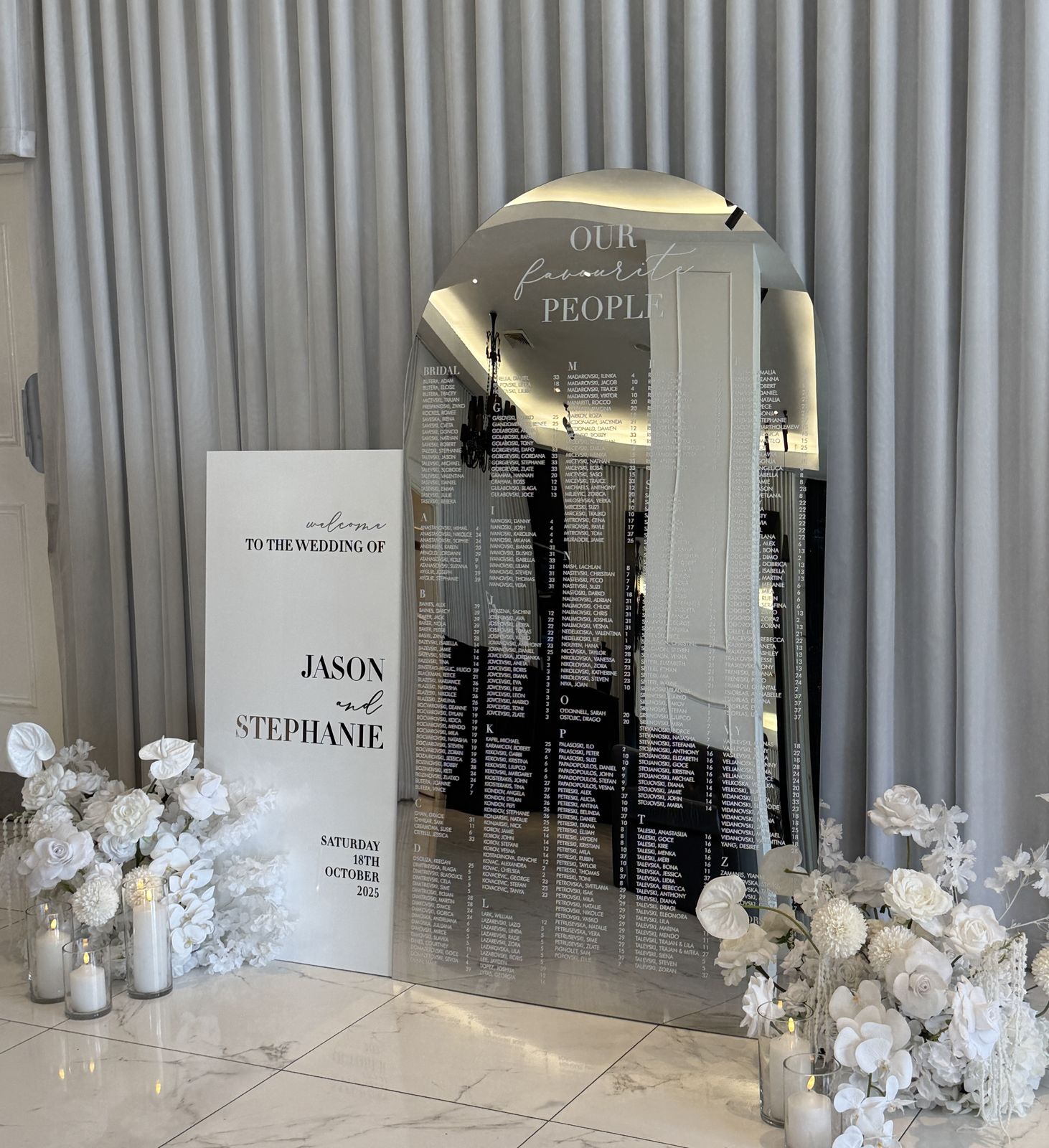
1. A silver mirror arch
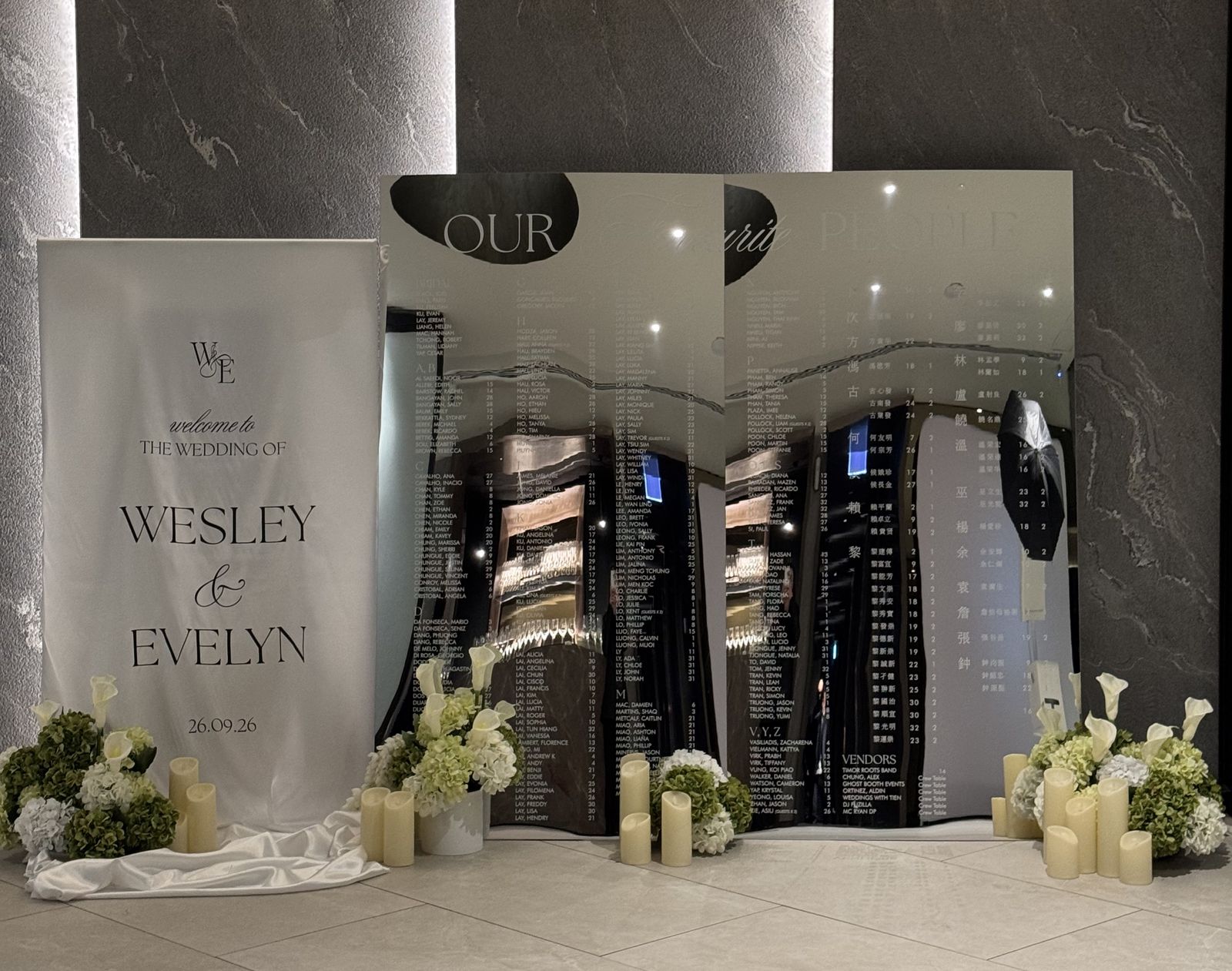
The mirror arch headed “Our favourite people” is a modern classic. White lettering on silver mirror glows under candlelight, and a separate white welcome sign in front gives the names and date a clean, non-reflective surface.
2. A bilingual chart across two panels
For families who read in different languages, give each language its own panel. The chart in the hero photo at the top of this post lists guests in English on one mirror panel and in Chinese characters on the other, so nobody has to translate their own name. If you are doing this, have someone fluent check every name on the proof.
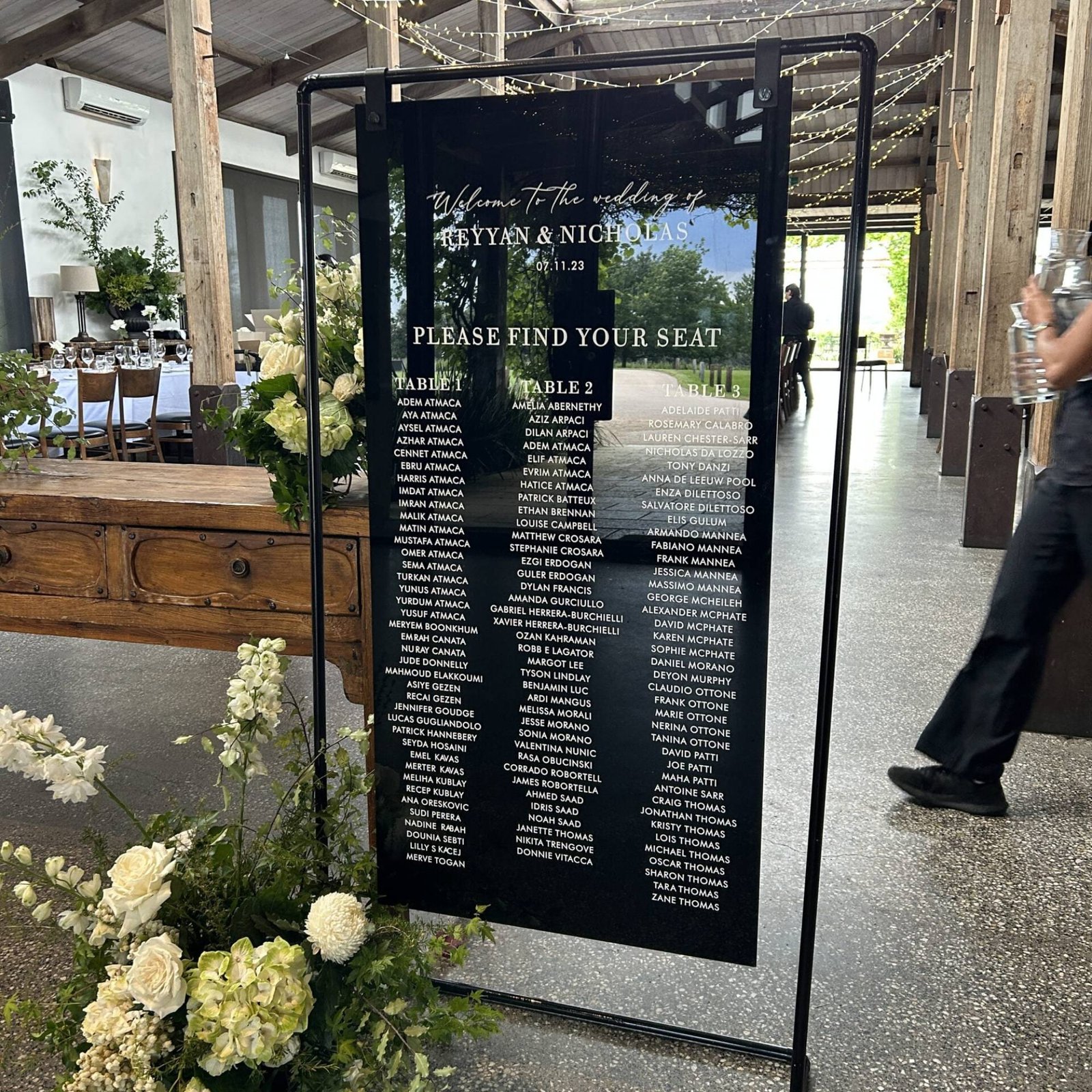
3. A black acrylic arch, grouped by table
Glossy black acrylic with white lettering looks sharp in an evening venue. This one lists the bridal party at the top, then each table as its own block.
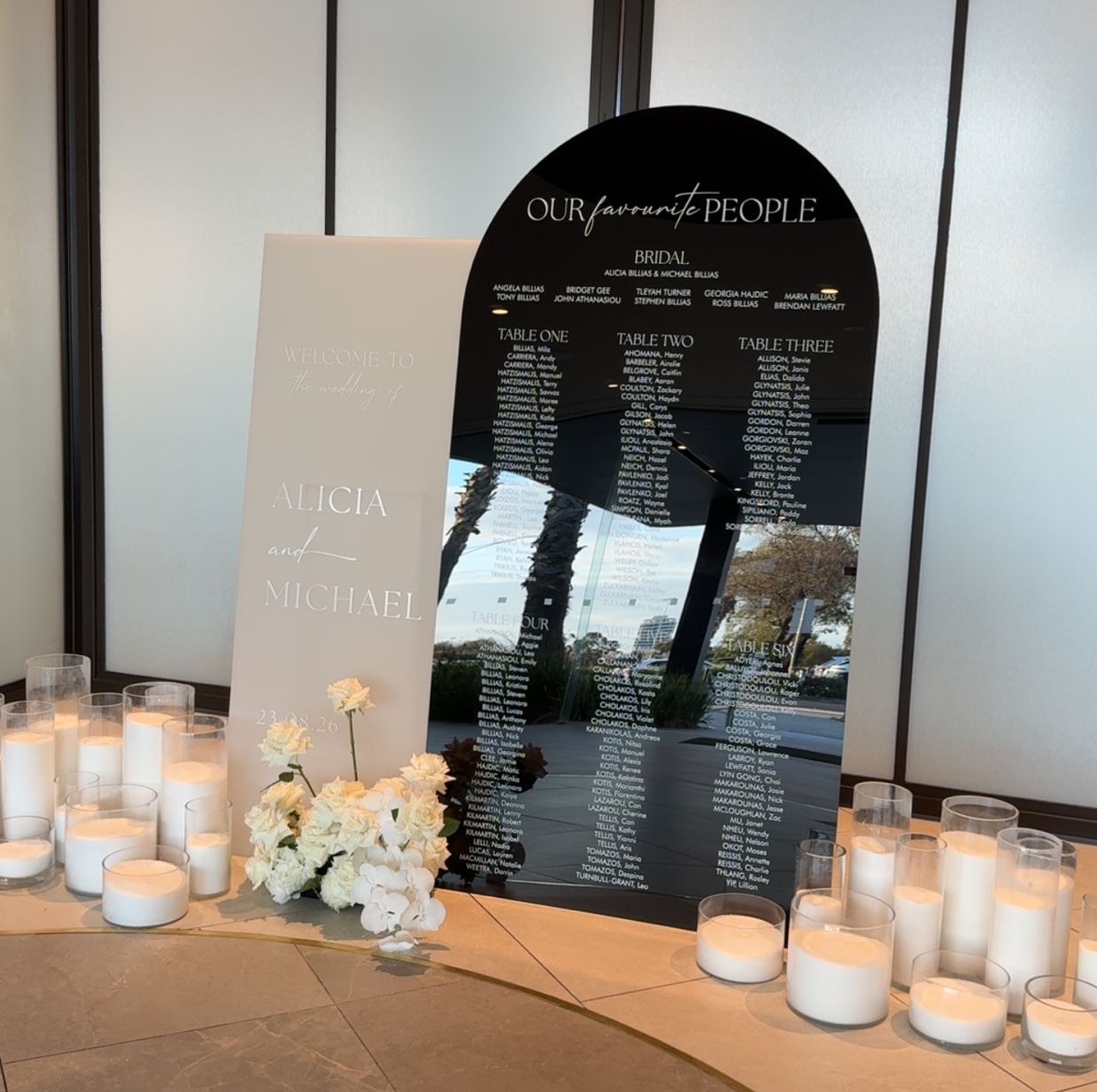
Black acrylic is glossy, so it reflects light like a softer mirror. Keep spotlights off the face of it.
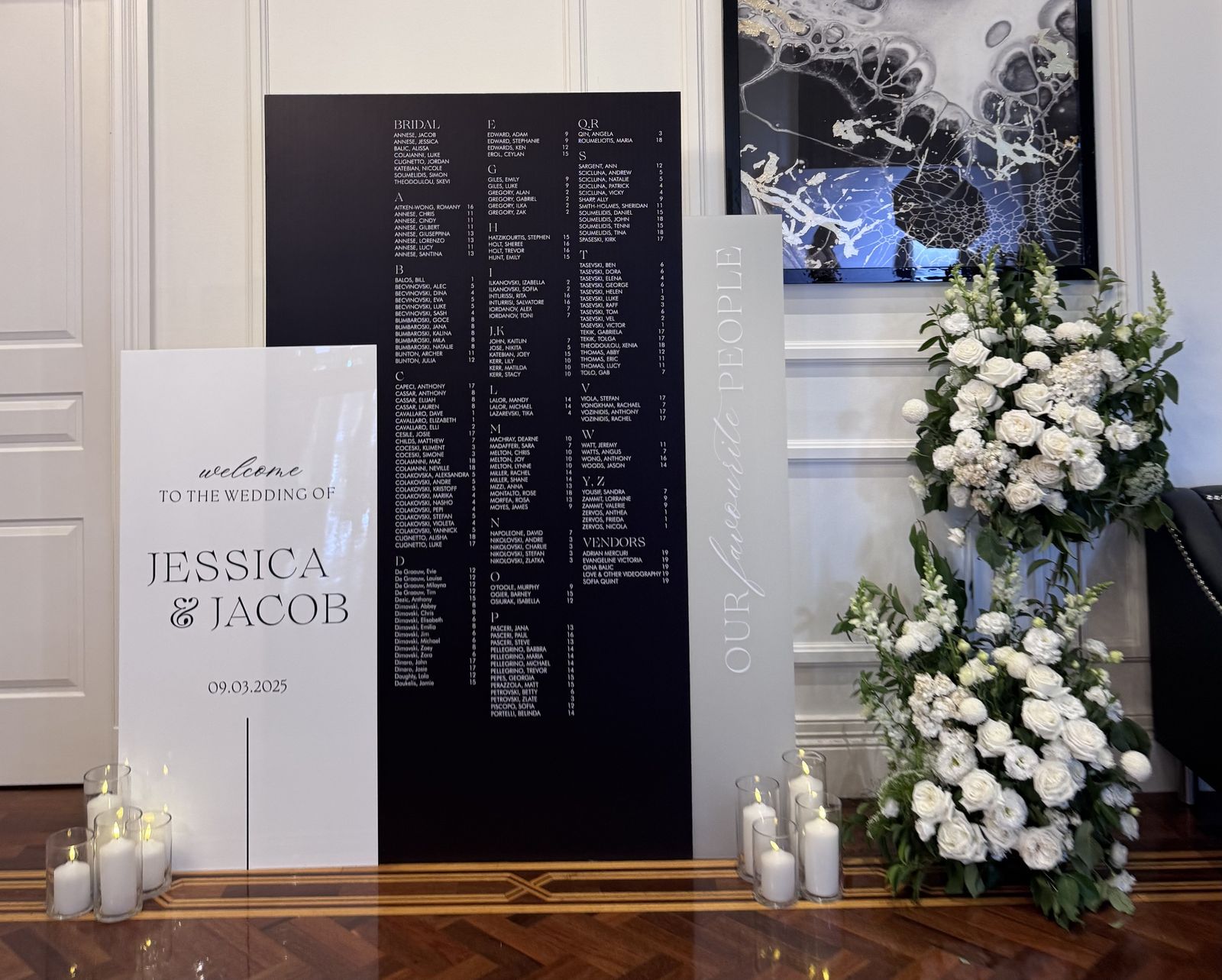
4. A black chart behind a white welcome sign
Reverse the usual colours: the large seating chart in black, a smaller white welcome sign in front, and a narrow grey panel with the heading set vertically. Layering three pieces at different heights makes a flat wall feel styled.
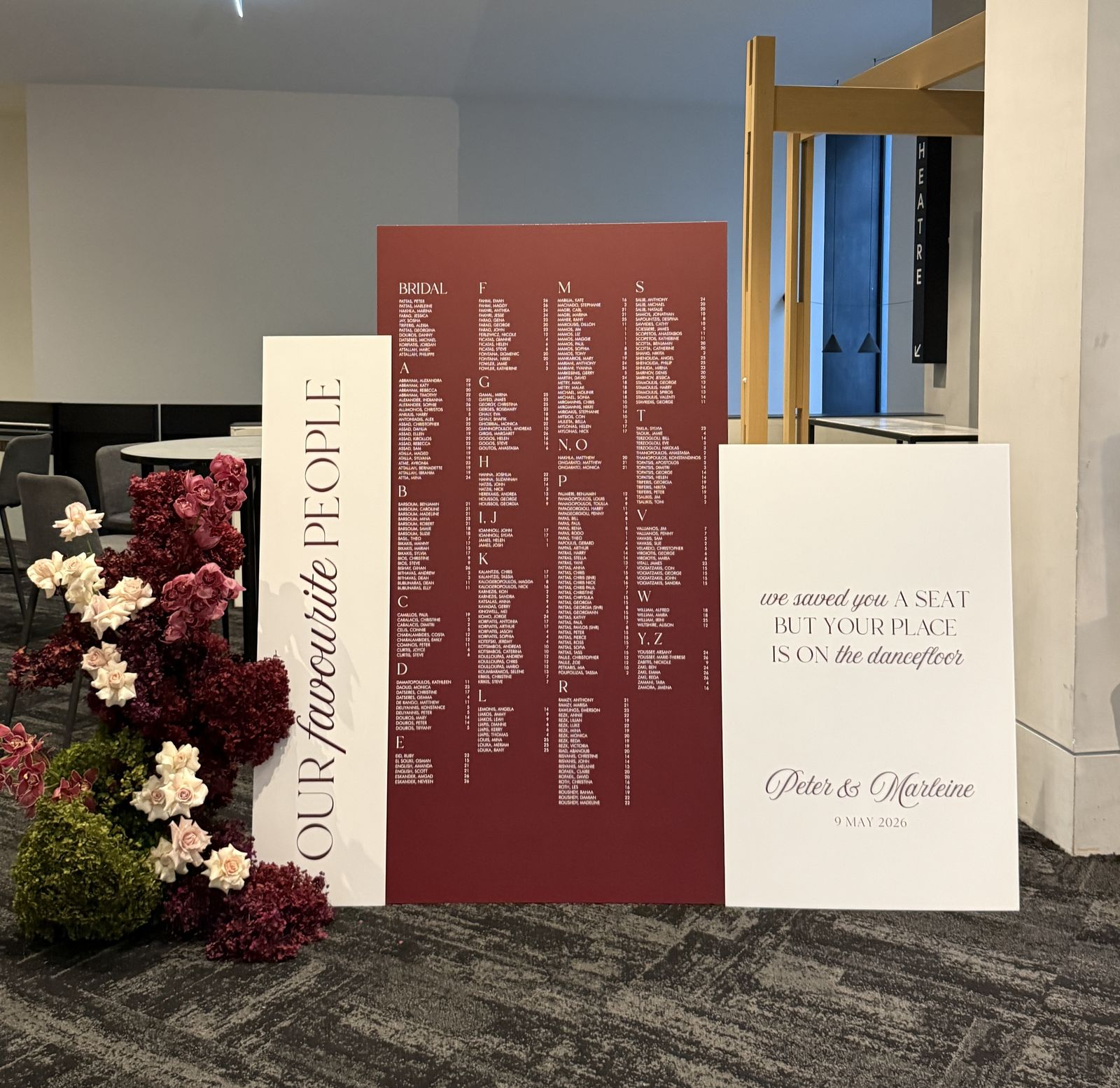
5. A coloured chart with a vertical title strip
Print the chart in your feature colour, put the heading on its own tall, narrow panel, and add a third sign with a line for the dance floor. Three panels, one consistent font.
6. A round chart
A circle reads as modern and soft at the same time. Names run in columns across the middle of the circle, so the top and bottom curve can carry a heading or your hashtag.

7. Mixed materials: board chart, satin welcome
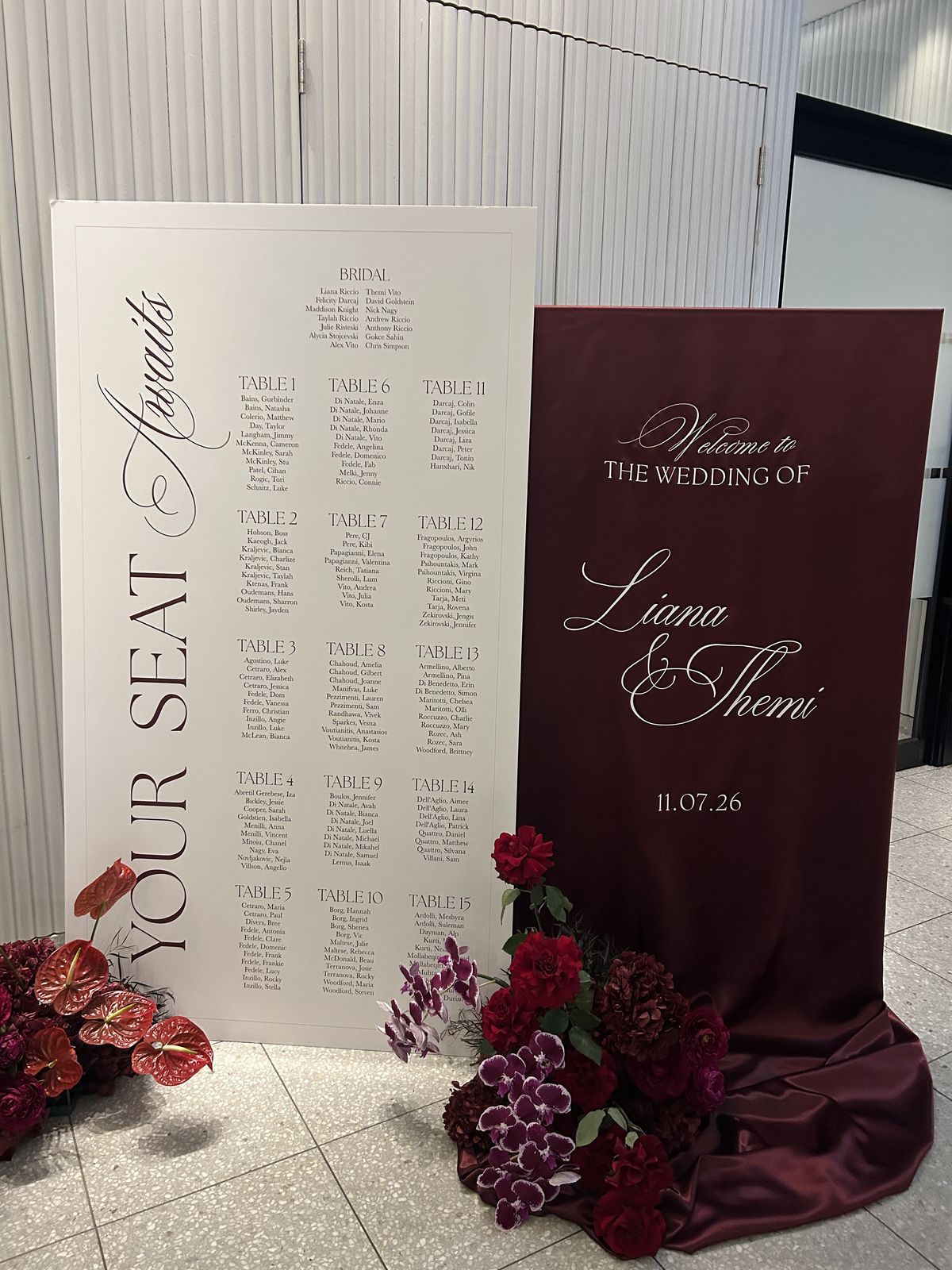
You do not have to use one material for everything. A white board chart with the heading “Your seat awaits” set vertically, beside a burgundy satin welcome sign, combines a crisp surface for small type with soft fabric for the names.
Satin and linen seating chart ideas
8. Satin panels pooled on the floor
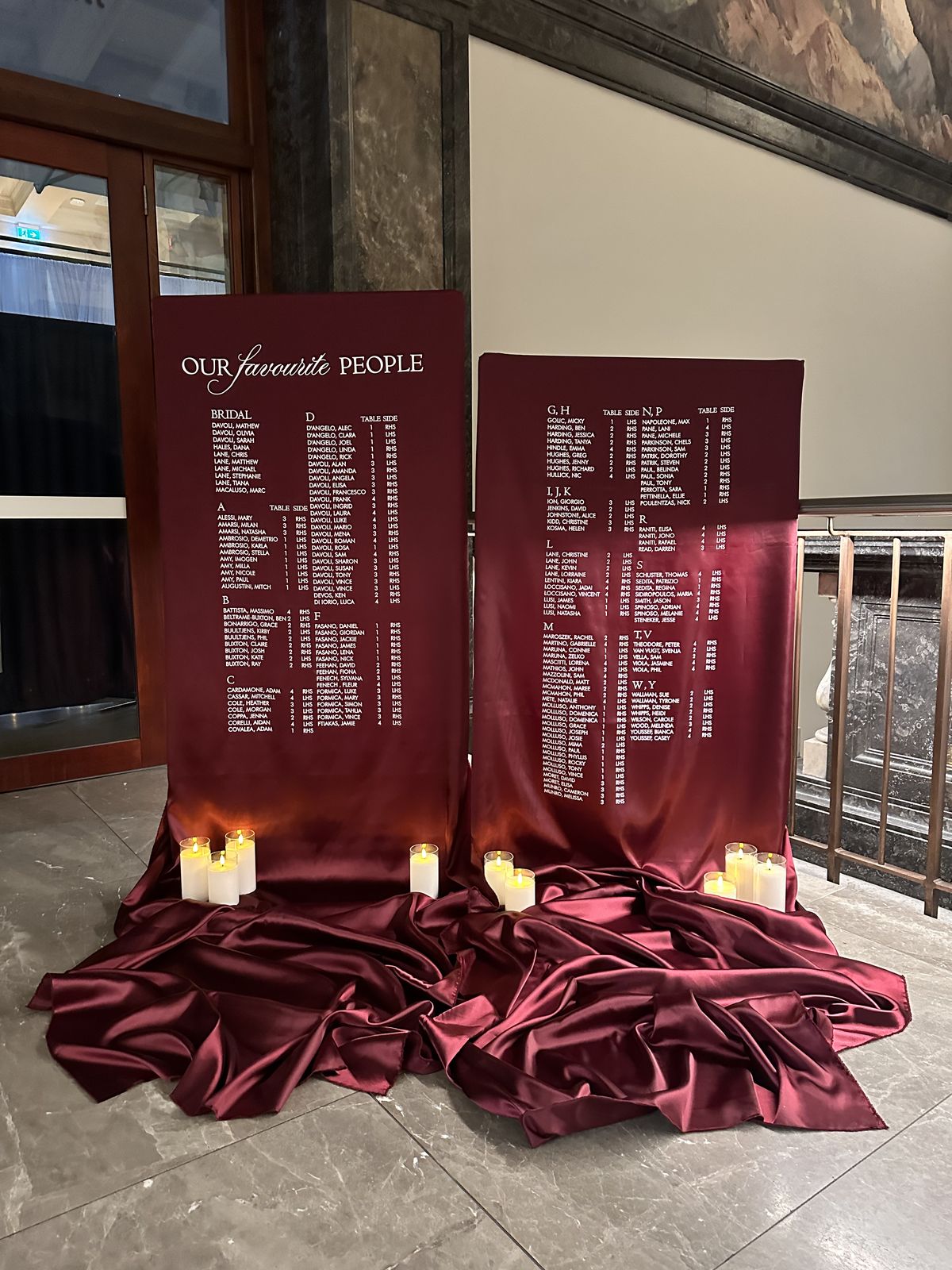
Two burgundy satin panels side by side, with the fabric pooling into the candles at the base. Every satin sign we make is handmade in house, with each letter placed and heat pressed by hand.
9. Olive satin with a view
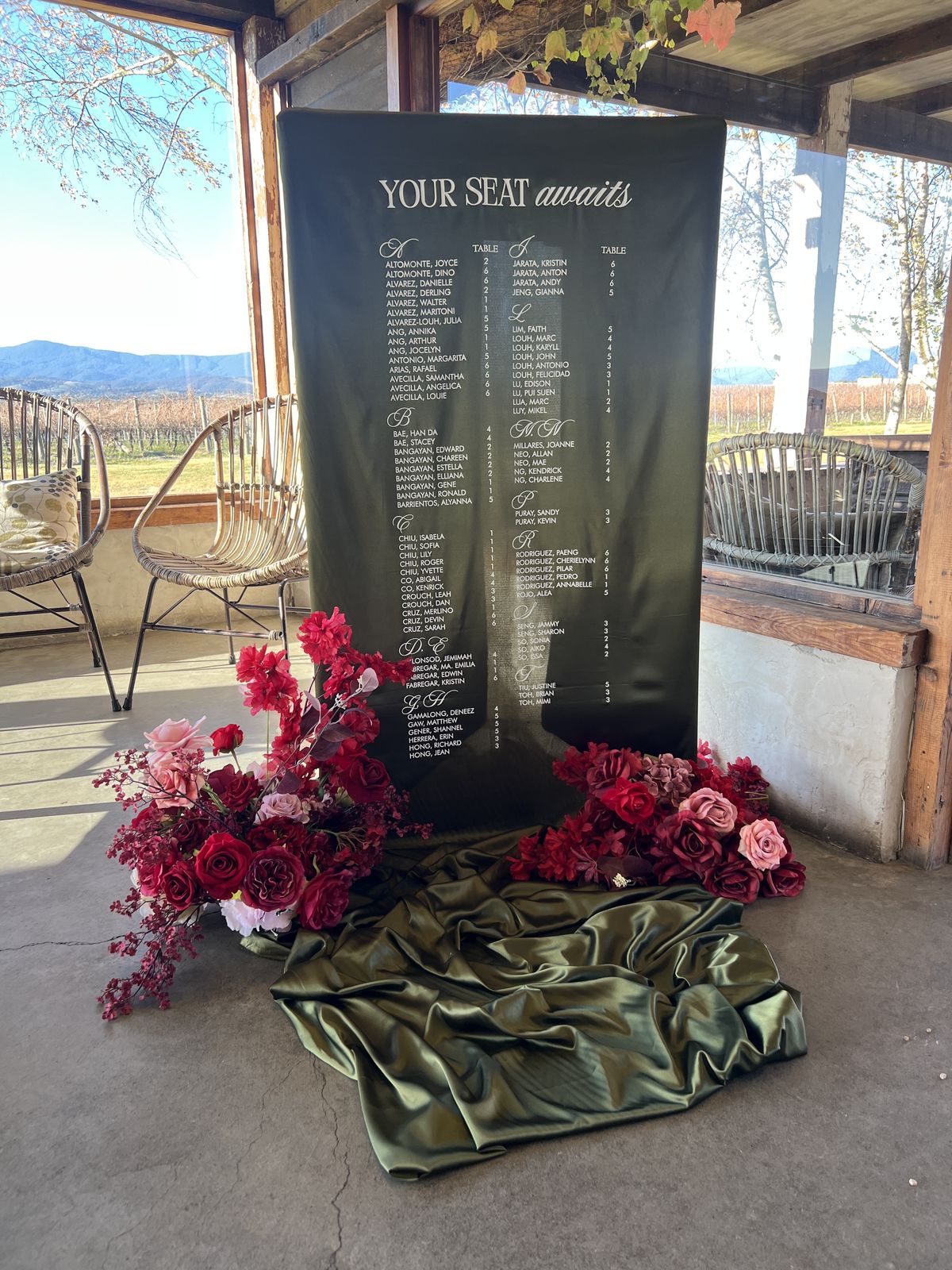
Olive green satin suits winery and Yarra Valley settings, where the colour picks up the vines behind it. Red and pink florals at the base make the green look deliberate.
10. White satin under a chandelier
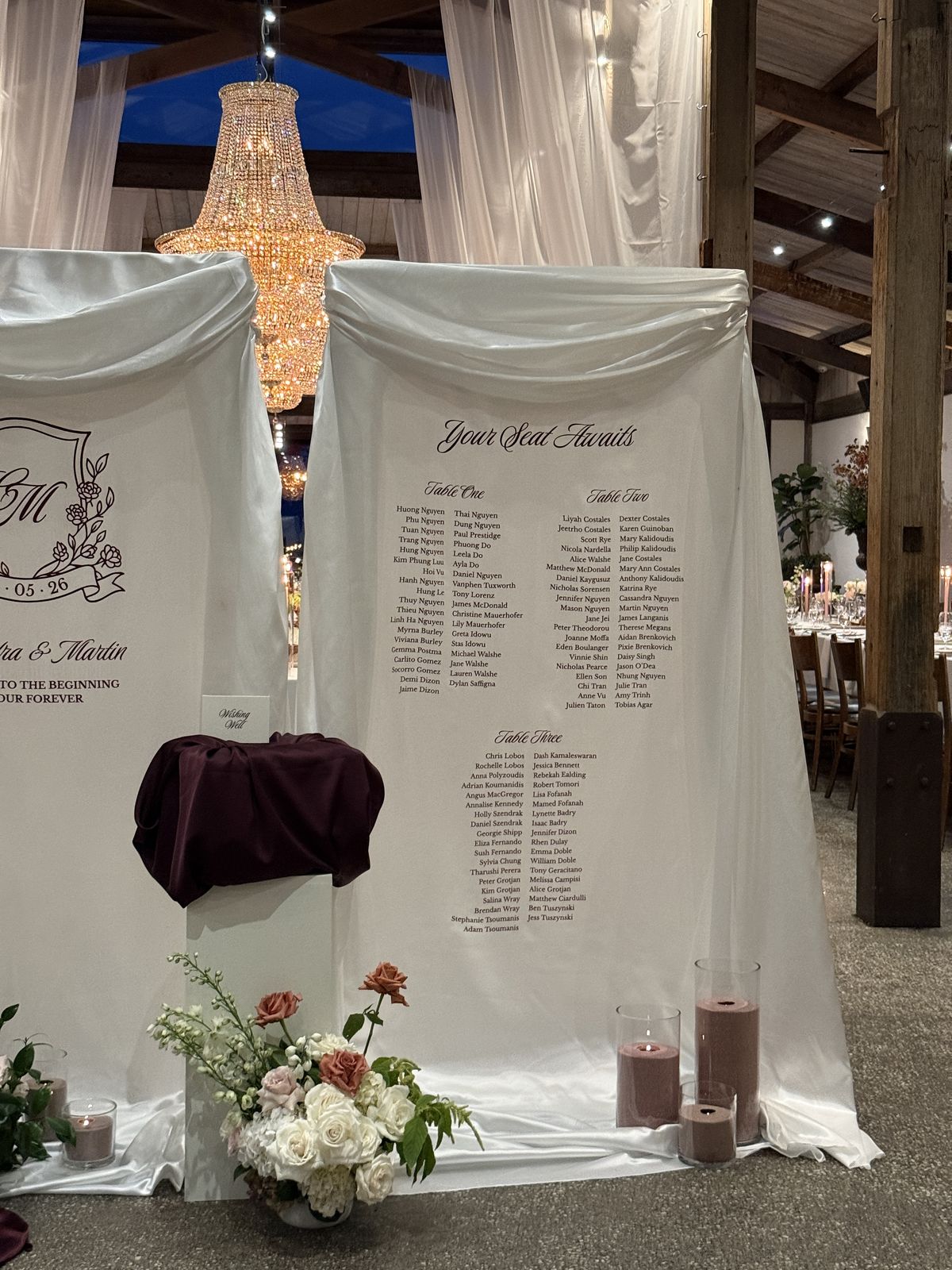
White satin swagged over the top of the frame, listing guests by table, looks bridal and formal. It suits ballrooms and marquees with a lot of white draping.
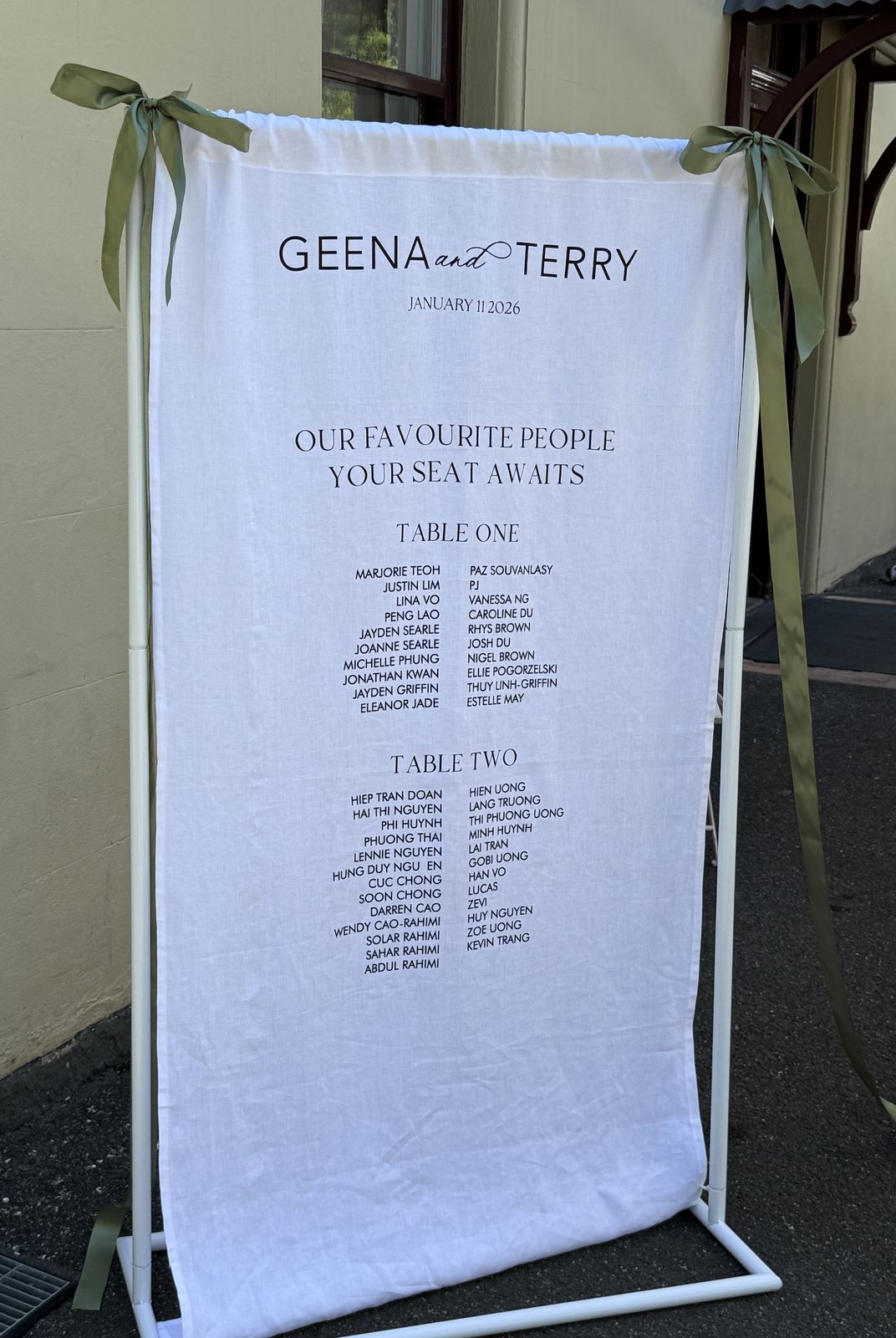
11. Linen with ribbon ties, for small weddings
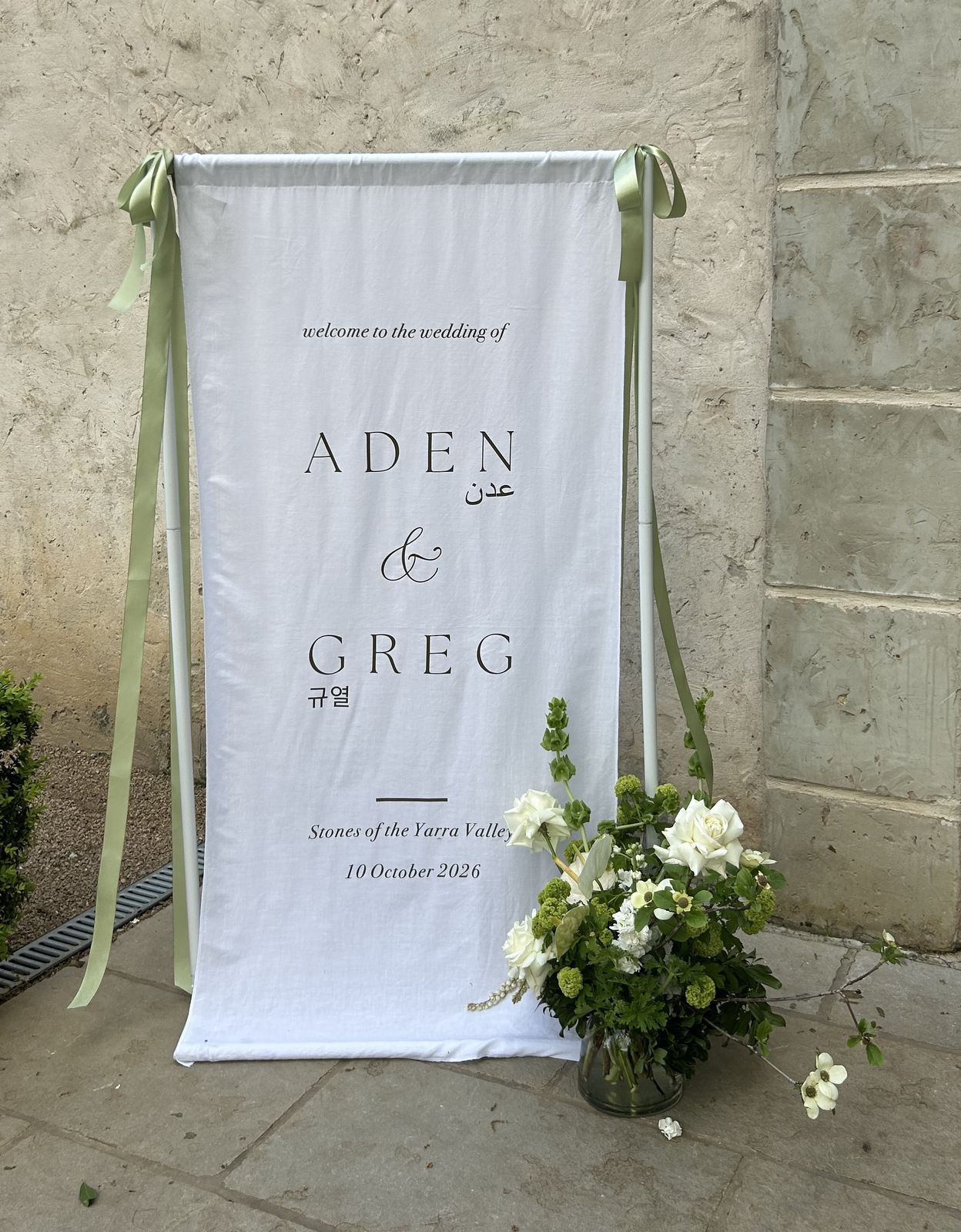
For smaller guest lists, a single linen panel tied to a frame with ribbons can hold both your names and the full seating list. It is relaxed and garden-friendly.
Coloured and shaped seating chart ideas
12. Bride’s side and groom’s side
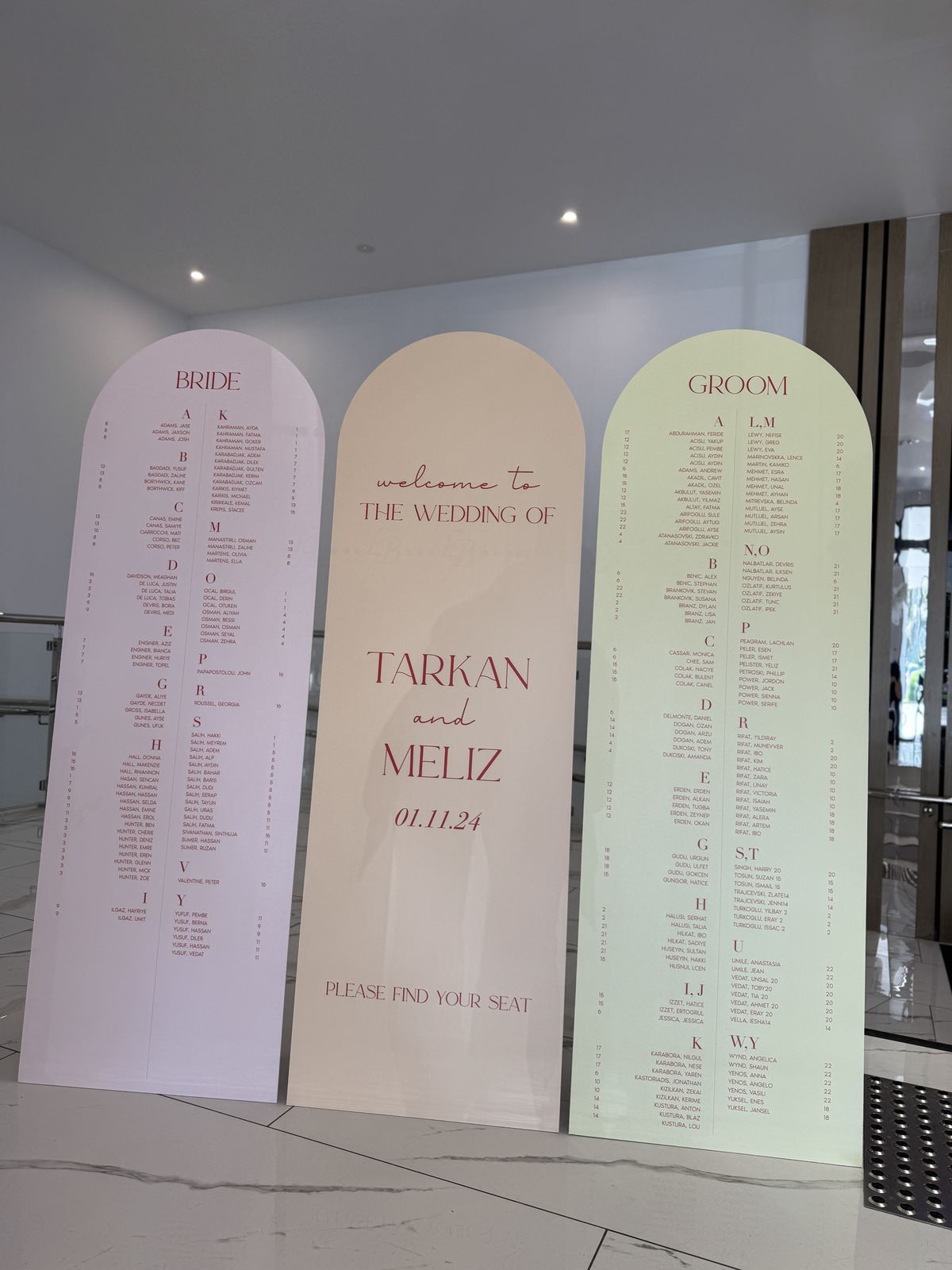
Split the chart into three arches: one for the bride’s guests, one for the groom’s, and a welcome arch in the middle. Each side is alphabetical, and soft pastels keep it from feeling formal.
13. A coloured arch grouped by table
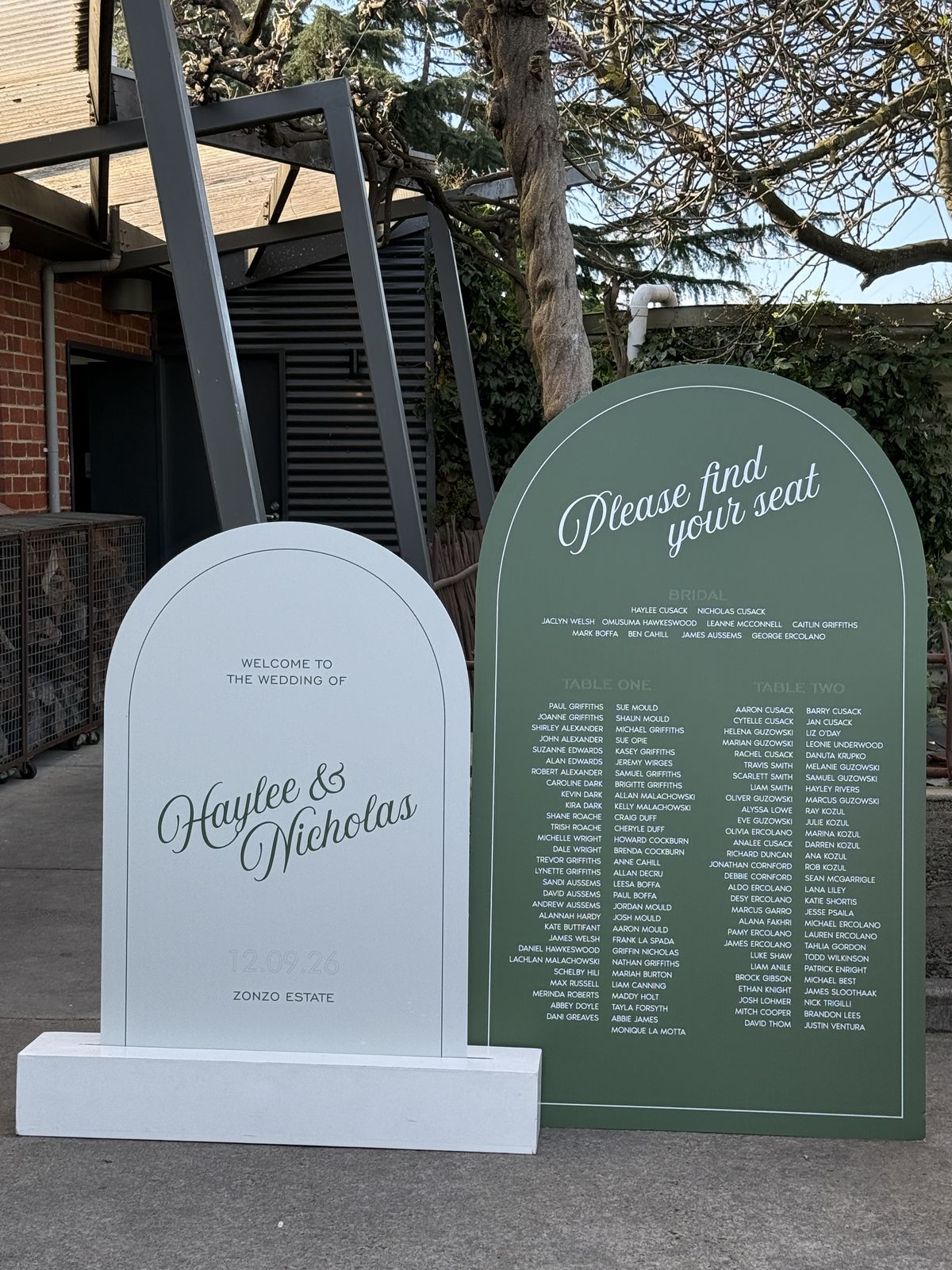
A deep green arch with cream script, listing the bridal table then each table in turn, paired with a pale blue welcome arch on a low white plinth.
14. A heading in your family’s language
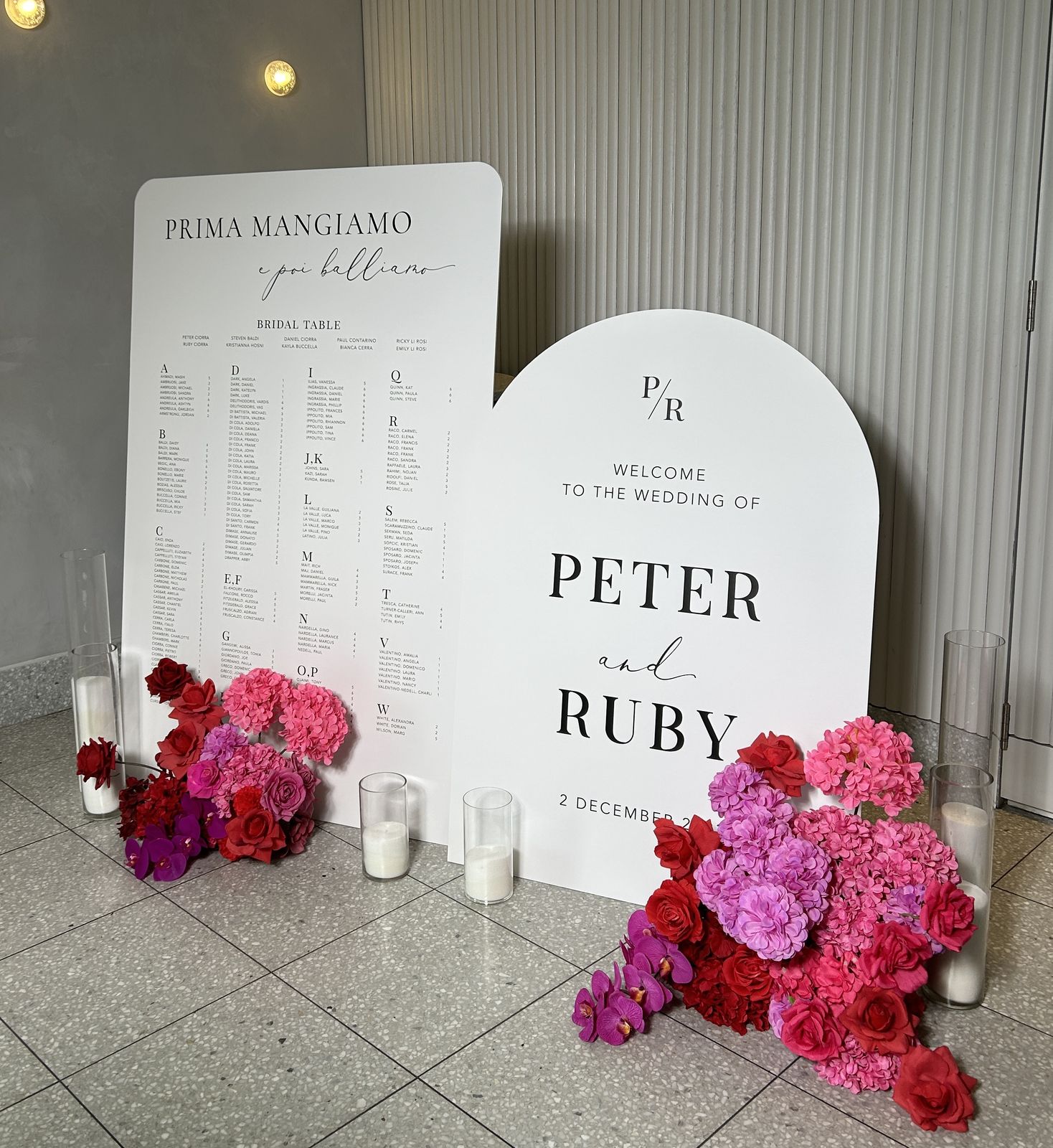
Swap “Find your seat” for a phrase in your heritage language. This chart opens with the Italian “Prima mangiamo e poi balliamo” (first we eat, then we dance), which says more about the night than any English heading.
15. Gold mirror lettering on white
Gold mirror vinyl on a white board gives you shine on the heading without a reflective background behind the names. The list stays easy to read from any angle.
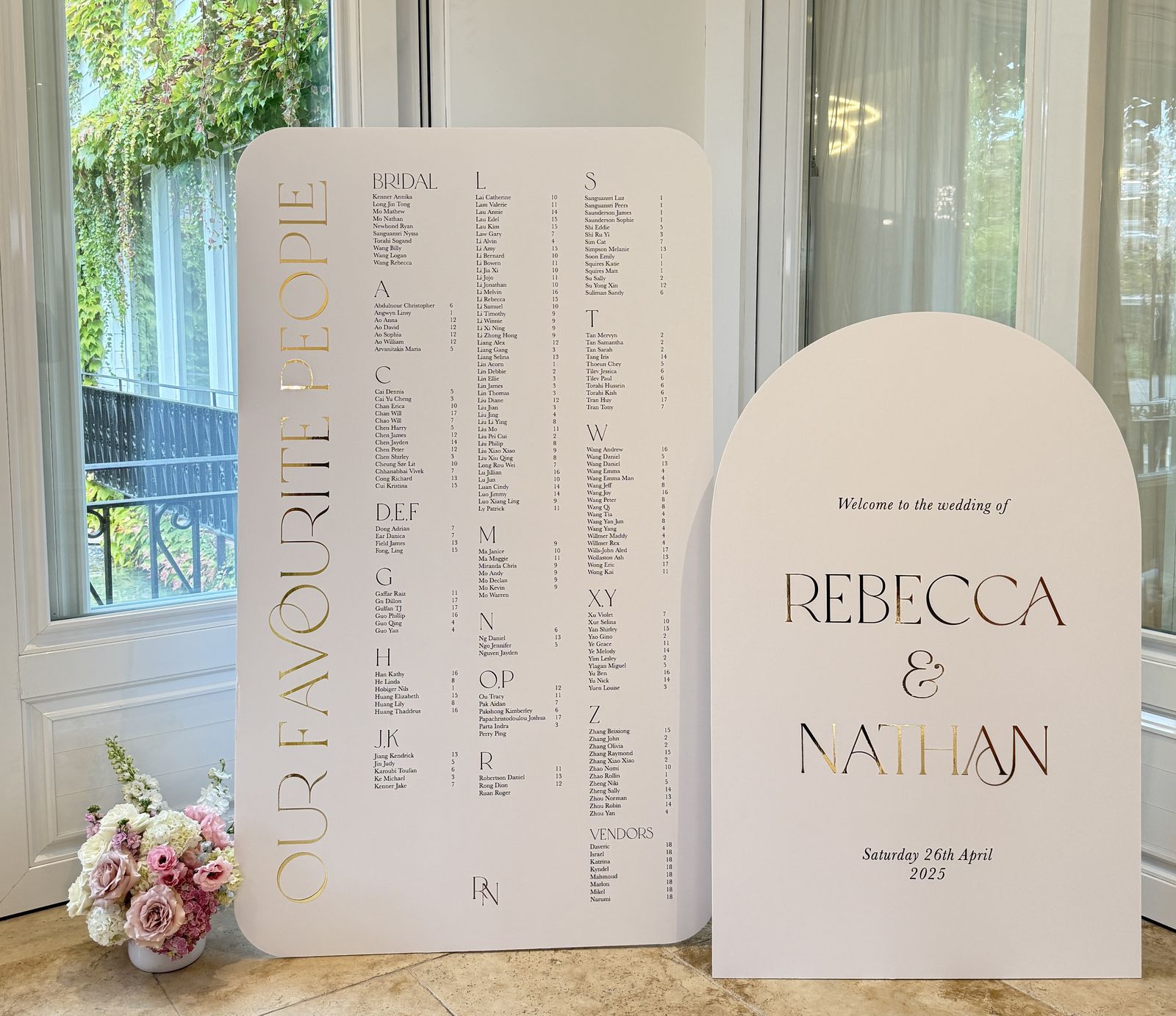
Note the “Vendors” section at the bottom: your photographer, band and planner can find their seats too.
Statement seating chart ideas
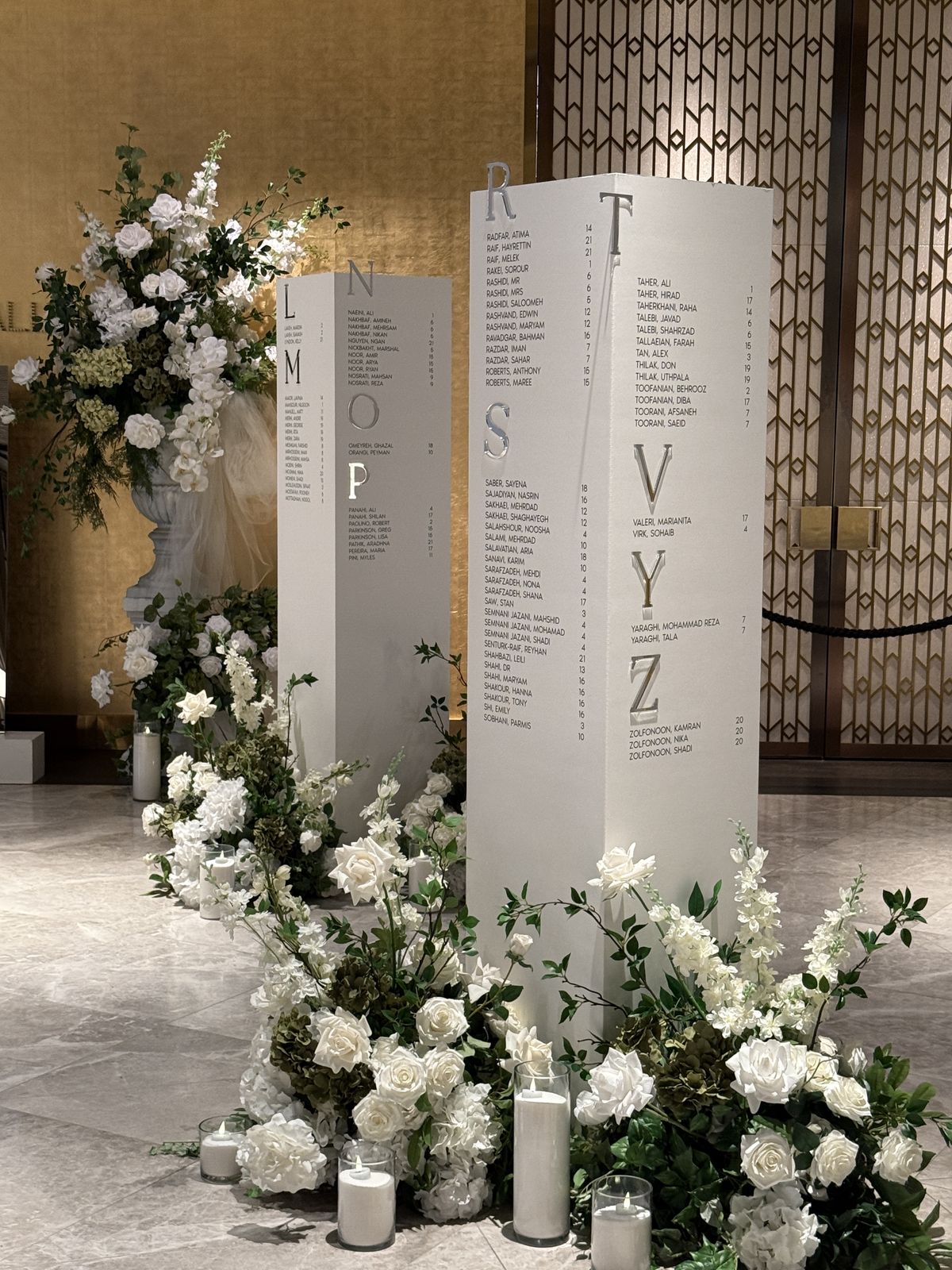
16. Seating pillars
Instead of a flat panel, print the chart onto tall white pillars, with each face carrying a few letters of the alphabet. Guests walk around them, which spreads the crowd out.
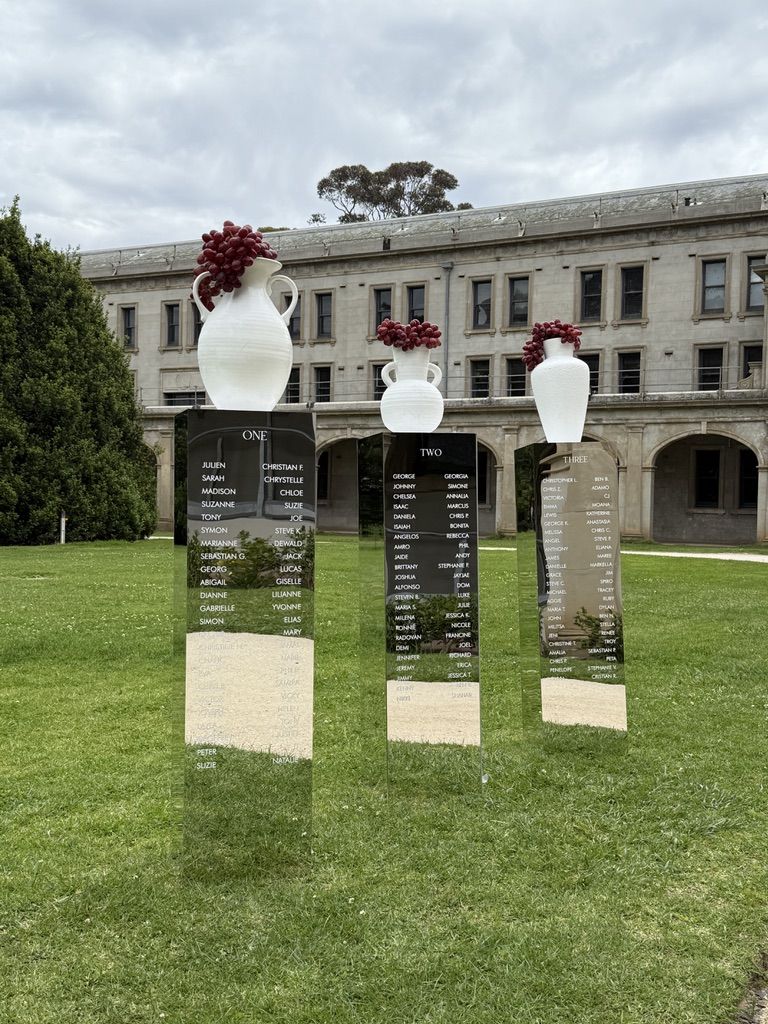
17. One mirror plinth per table
For an outdoor reception, set out a row of mirror plinths, one for each table, topped with vases or fruit from the tablescape. Each plinth lists that table’s guests.
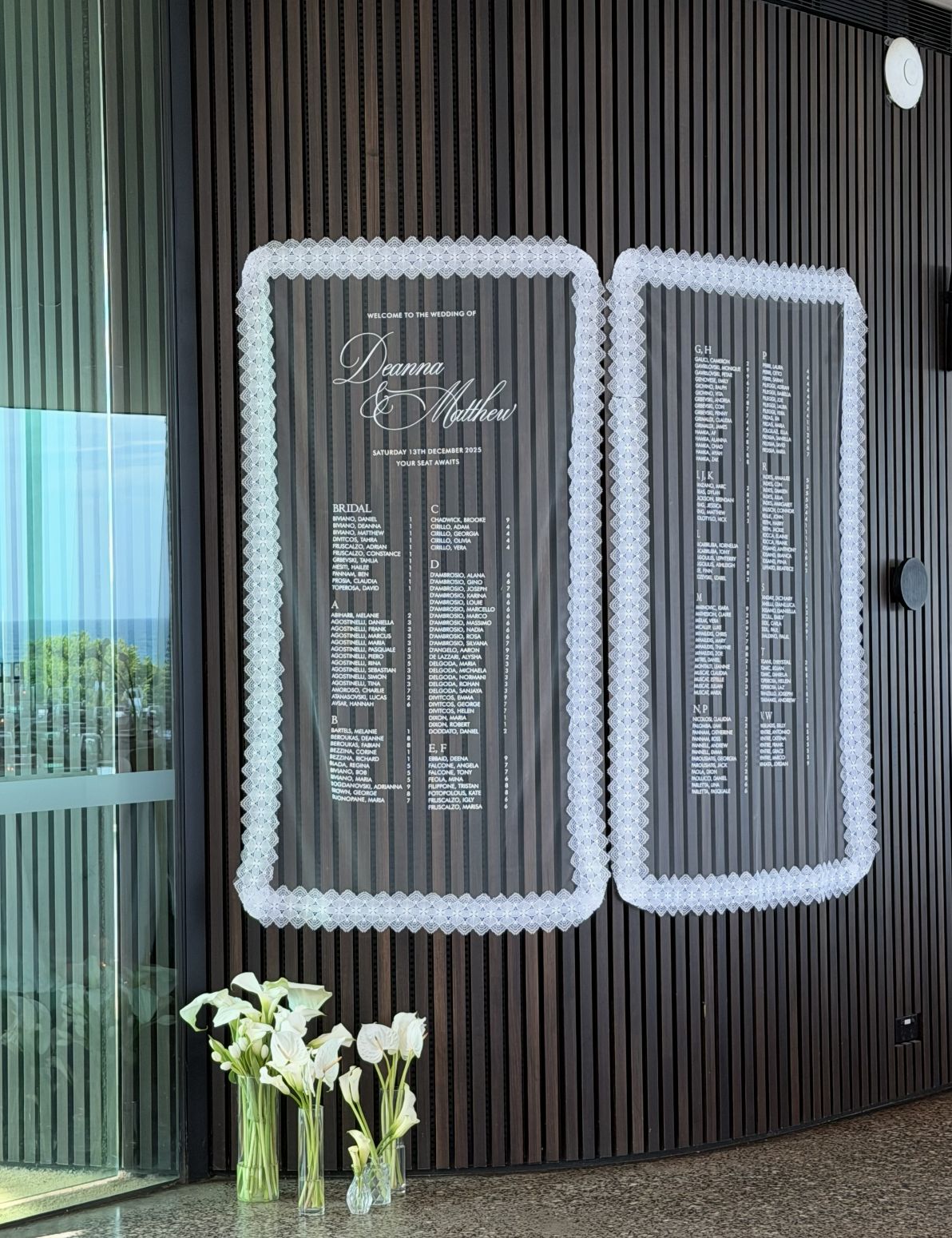
18. Lace-framed wall panels
Mount the chart directly on a feature wall and frame each panel with scalloped lace. It takes no floor space, which helps in narrow foyers.
19. Welcome and chart on one frame stand
A single black acrylic panel in a black metal frame stand can carry the welcome, your names and a by-table list. It is one piece to deliver and one footprint at the door.
20. A QR code seating chart
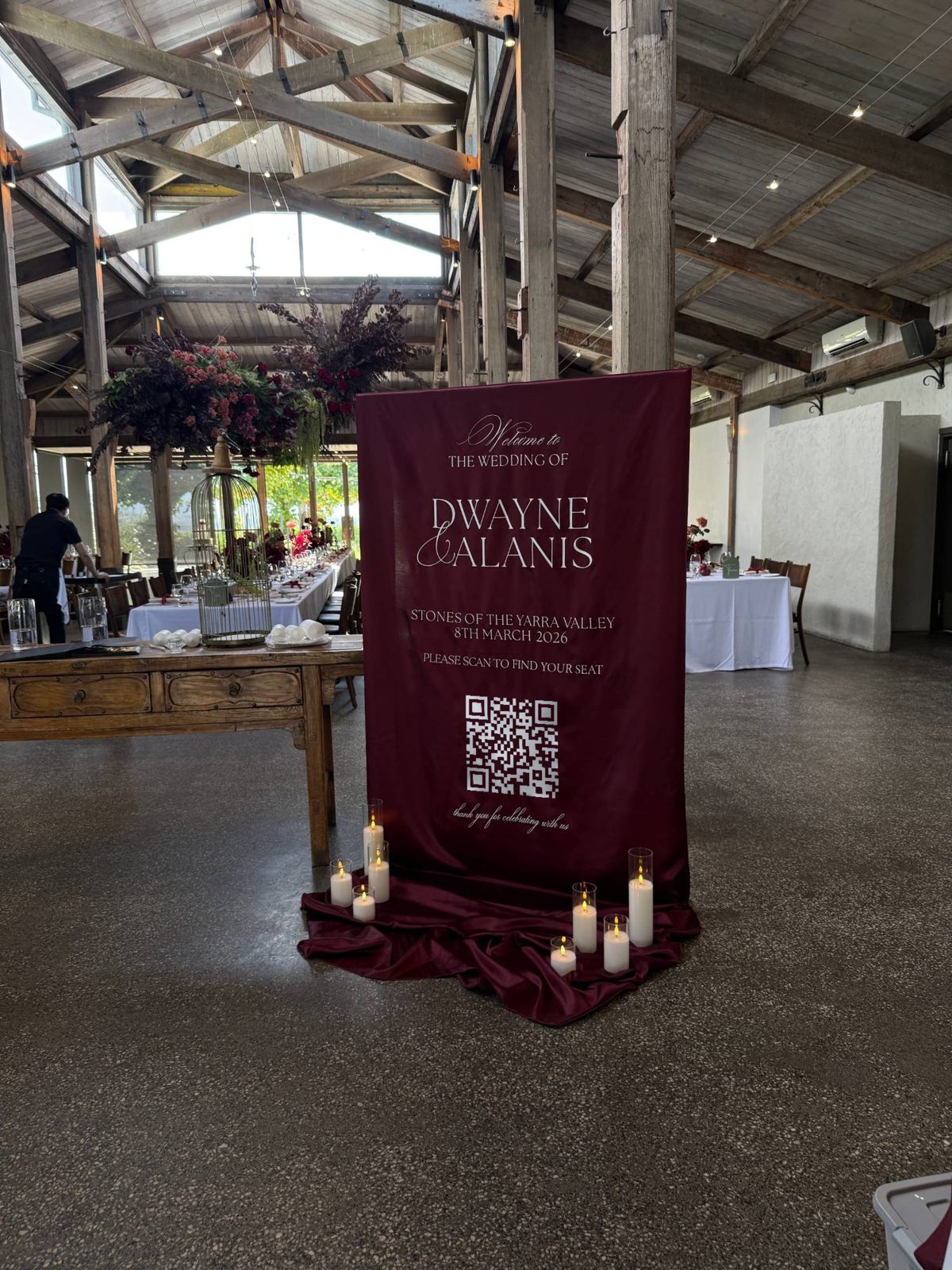
The most modern option replaces the wall of names with a QR code. Guests scan it with their phone camera, type their name and their table appears. There is no app to download, nobody crowds one board during canapés, and guests can zoom in on their own screen, which helps anyone without their glasses. The sign carries your names, date and the code, so it often doubles as the welcome sign.
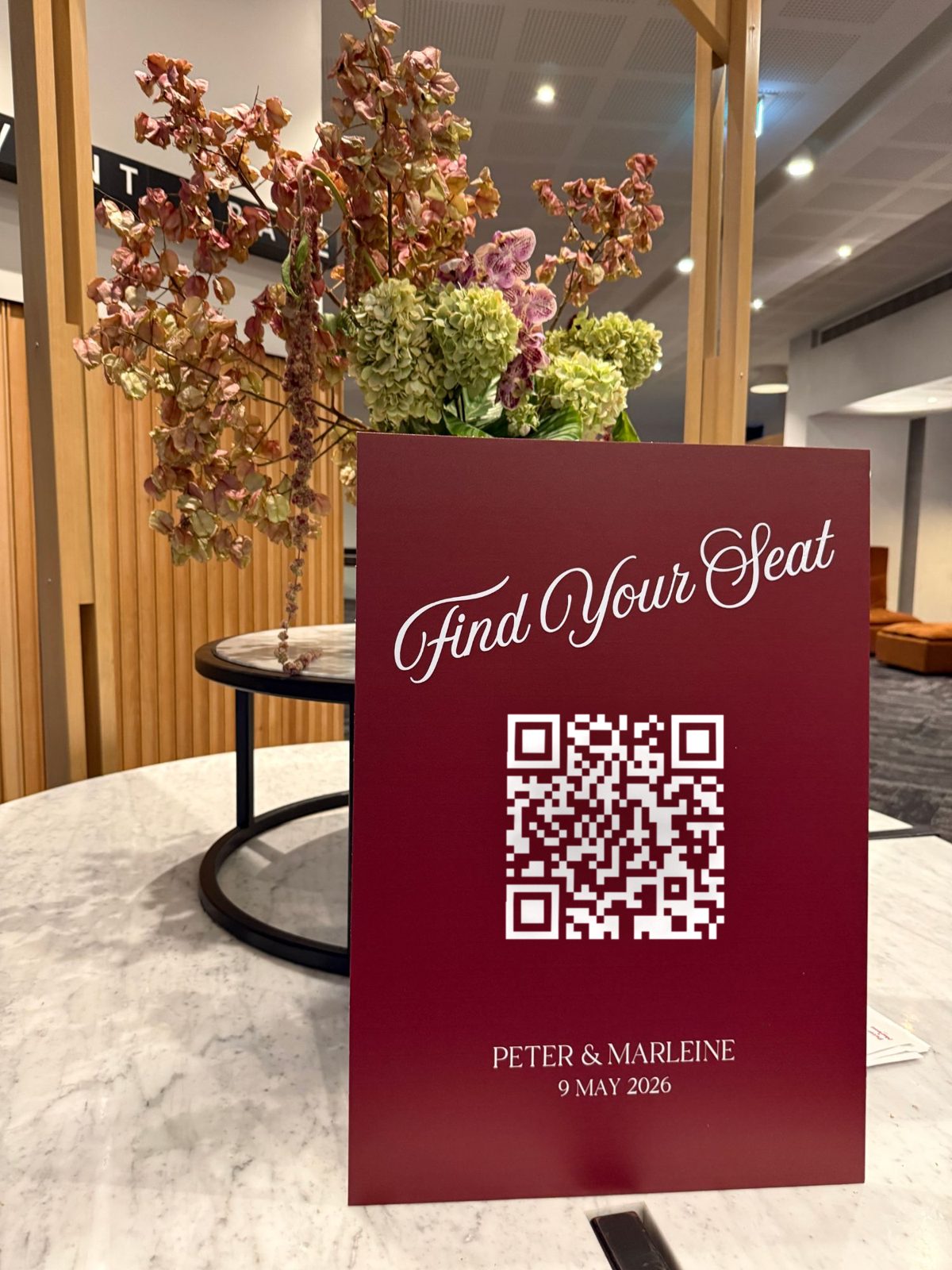
Ghost Booth Events builds the chart on its own software and designs and prints the sign in house. See how it works on our QR code seating chart page.
Layout rules for a readable seating chart
A beautiful chart still fails if guests cannot find their name. These are the rules we design to.
Font size
A widely used signage rule of thumb is about 25 mm of letter height for every 3 metres of viewing distance for comfortable reading, and 25 mm per 6 metres as a bare minimum (Digital Signage typography guide). Guests usually stand about one to one and a half metres from a seating chart, which works out to capital letters of roughly 8 to 13 mm. In practice:
| Element | Target height of capital letters | Approximate type size |
|---|---|---|
| Guest names | 8 to 10 mm | About 32 to 40 pt in most fonts |
| Letter or table headings | 15 to 20 mm | About 60 to 80 pt |
| Main heading (“Find your seat”) | 40 mm or more | Set to suit the panel |
Avoid thin script fonts for the names. Script works for the heading; the names list should be a clear serif or sans serif. On mirror and black acrylic, go one weight heavier than you would on white.
How many names per column
With names around 32 to 36 pt and comfortable line spacing, each line takes about 14 to 16 mm of height. Our working estimate:
| Panel | Columns | Names per column (after headings) | Approximate total |
|---|---|---|---|
| A1 portrait (594 × 841 mm) | 3 | 30 to 35 | 90 to 110 names |
| 900 × 1200 mm | 4 to 5 | 40 to 45 | 160 to 200 names |
| Two panels side by side | 6 to 10 | as above | Any guest list |
These are estimates based on line height, not hard limits; long double-barrelled surnames take more width. If your list is over the comfortable number for one panel, split it across two panels (A to K, L to Z) rather than shrinking the type.
Order and grouping
- Put the bridal table first. It is the table everyone already knows, and it removes those names from the main list.
- Add a vendors section at the end so your photographer, videographer and band can find their seats.
- Show surname then first name in an alphabetical chart (for example “Nguyen, Linh”). Families with the same surname then sit together in the list.
- Keep table numbers right-aligned in their own column so the eye can jump straight from name to number.
Last-minute changes
- Set a cut-off. Printed seating charts are finalised last, usually about 10 days before the wedding once RSVPs close.
- Proof twice. At Ghost Booth Events, names are proofed twice before cutting so nobody is misspelt on the day. Ask a family member from each side to read the proof too.
- Leave a little space at the end of each letter or table block. One late addition can often be fitted in without redesigning the whole panel.
- Keep a backup list with your venue coordinator so staff can help anyone who is not on the chart.
- Or go QR. With a QR code seating chart, moving a guest or adding a late RSVP is an update to the list, not a reprint. Because the seating stays editable, the sign itself can be printed before your RSVPs close.
Matching the chart to the rest of your signage
Your seating chart usually stands next to the welcome sign, and guests then look for their table number, so design all three together. Our wedding welcome sign ideas and wedding table numbers posts cover the pieces either side of the chart, and acrylic vs mirror vs fabric wedding signs compares the materials. For timing and placement across the whole day, see our wedding signage Melbourne guide.
Ghost Booth Events has created more than 1,000 signs for Melbourne weddings. Send us your invitation and a rough guest list through our wedding signage page or enquire here, and we will come back with a proof and an itemised quote.
Wedding seating chart questions
How big should a wedding seating chart be?
An A1 panel (594 × 841 mm) comfortably fits roughly 90 to 110 names in three columns at a readable size. For larger guest lists, use a 900 × 1200 mm panel or split the list across two panels rather than shrinking the type.
What font size should names be on a seating chart?
Aim for capital letters around 8 to 10 mm tall, which is roughly 32 to 40 pt in most fonts. Guests read a seating chart from about one to one and a half metres, and a clear serif or sans serif reads far better than a thin script at that size.
When should the seating chart be finalised?
Printed seating charts are usually finalised about 10 days before the wedding, once RSVPs close. A QR code seating chart can be printed earlier because the seating itself stays editable right up to the day.
Should a seating chart be alphabetical or by table?
Alphabetical is faster for guests to scan at larger weddings, because they only need to know their own surname. Grouping by table suits smaller weddings and lets guests see who they are sitting with. Many couples use a hybrid, with the bridal table listed first and everyone else alphabetical.
How does a QR code seating chart work?
Guests scan the QR code on the sign with their phone camera, type their name and see their table number. There is no app to download. Ghost Booth Events builds the chart on its own software and designs and prints the sign to match your stationery.